
Starting a Home-Based Cosmetics Business: Step-by-Step Guide
Do you want to sell your homemade cosmetics from home? Then the first thing you need is a registered business. The good news: a registered business for cosmetics made at homeis straightforward and, in most countries, quick and inexpensive to set up. The more important question is: what comes next? This guide explains step by step which business structure is the right one, which authorities you need to inform, whether you are really allowed to produce in your kitchen – and which insurance policies and tax rules you should know about.
Looking for a general overview of all five steps to selling legally? Then read our guide to selling homemade cosmetics legally. This article focuses specifically on business registration and the particular requirements for manufacturing at home.
Small business vs. registered business: which is better for cosmetics starters?
Before you can register a small cosmetics business, you need to decide on a business structure. For most beginners there are two options to consider:
| Criterion | Small business | Registered business |
|---|---|---|
| Legal status | Not entered in a commercial register | Entered in the commercial register |
| Bookkeeping | Simple cash-basis accounting | Double-entry bookkeeping above certain thresholds |
| Set-up costs | Low (small registration fee) | Registration fee + notary + register entry |
| Liability | Personal, unlimited | Personal, unlimited |
| Suited to | Hobby & side business | Full-time self-employed |
Our recommendation for beginners
Start as a small business. Simple cash-basis accounting (income-surplus) saves you time and accountant costs. If you grow later and exceed the turnover or profit thresholds that apply in your country, you may automatically move up to a fully registered trader – but as a starter you are a long way from that. Most hobby soap-makers and DIY-cream producers stay in the small-business category for years.
Business registration: which form, which costs?
Registering your business is the official first step when you want to register your cosmetics business. Here is how to proceed:
Find the responsible authority
In most countries you register a business with a local or national authority – often part of your municipality or a companies/trade register. In many places you can register online; search for business registration together with the name of your town or country.
Complete the registration form
You will usually need to complete a business registration form. Important: for the description of activity, enter wording such as “manufacture and sale of cosmetic products” so the scope of your business is recorded clearly.
ID document + fee
Bring a valid ID document. The fee varies from country to country and is usually modest. Some authorities charge a small extra fee for registering online.
Receive your registration certificate
After registering you receive a confirmation or business certificate – often immediately or within a few days. In many countries the tax office is informed automatically and sends you a form for tax registration.
Important: description of activity
Do notwrite just “retail” or “online trade”. The correct description is: “manufacture and sale of cosmetic products”. This helps you avoid problems later with authorities or your local chamber of commerce.
What happens after registration?
After registering your business you are automatically registered with several bodies:
- Tax office: sends you the form for tax registration (this is where you may opt into a small-business VAT scheme, if your country offers one)
- Chamber of commerce: in some countries you become a mandatory member. The fee for small businesses is often waived in the first year and modest thereafter
- Statutory accident insurance: depending on your country, you may need to register with a statutory accident-insurance body. Without employees you pay only the minimum contribution
Making cosmetics at home: is it even allowed?
The short answer: Yes. No EU country has a law that prohibits the manufacture of cosmetics on private premises. The EU Cosmetics Regulation (EC) 1223/2009 stipulates thatyou must produce in compliance with GMP – but not where. What matters is that your workplace meets the hygiene standards.
What you need to bear in mind
- Check your tenancy agreement:some tenancy agreements prohibit commercial use. Ask your landlord for written permission – most have no problem with quiet manual work that brings no customer traffic
- Residential zoning:in purely residential areas, local planning rules often allow commercial activity only if it is “non-disruptive”. Small-scale cosmetics manufacturing usually falls within that
- Separate area:you do not need a dedicated room, but you do need a clearly separated, clean working area. The kitchen is fine – but not while you are cooking
- Storage: raw materials and finished products must be stored separately from food and at suitable temperatures
If you make and sell soaps, creams or lip balm from home, you are in good company: thousands of micro-producers across Europe work this way. Whether you start with a simple soap or a more demanding cream – the legal fundamentals are the same.
Health & market-surveillance authorities: do I have to register?
Unlike with food, there is no mandatory registration with a health authority for cosmetics manufacturers. Market surveillance for cosmetics sits with the competent national or regional authorities (usually a trading-standards or market-surveillance body). Even so, you should know what may come your way:
Automatic forwarding
After you register your business, the registering authority automatically informs various bodies. In some regions you receive a letter from the local market-surveillance or trading-standards authority.
Possible inspections
The authorities can carry out unannounced inspections – in practice this rarely happens to small producers, but you should be prepared. A clean workplace, documented batches and a complete PIF are your best protection.
Get in touch proactively
We recommend contacting the competent authority voluntarily and briefly explaining what you plan to do. It shows professionalism and avoids surprises.
Important: the notification obligation under Art. 13 of the EU Cosmetics Regulation (CPNP notification) concerns yourproduct, not your business. For every cosmetic product you place on the market you must submit a CPNP notification – but that is a separate step.
Document your production in line with GMP
INCIkit helps you document batches seamlessly, generate INCI lists automatically and manage your formulations digitally – exactly what a market-surveillance inspector wants to see.
GMP requirements for home producers
GMP (Good Manufacturing Practice) to ISO 22716 is mandatory for everycosmetics manufacturer – even if you only fill 20 jars a month in your spare room. The standard sounds intimidating, but it can be implemented pragmatically on a small scale. Our GMP guide to ISO 22716 explains the details. Here is the short version for home producers:
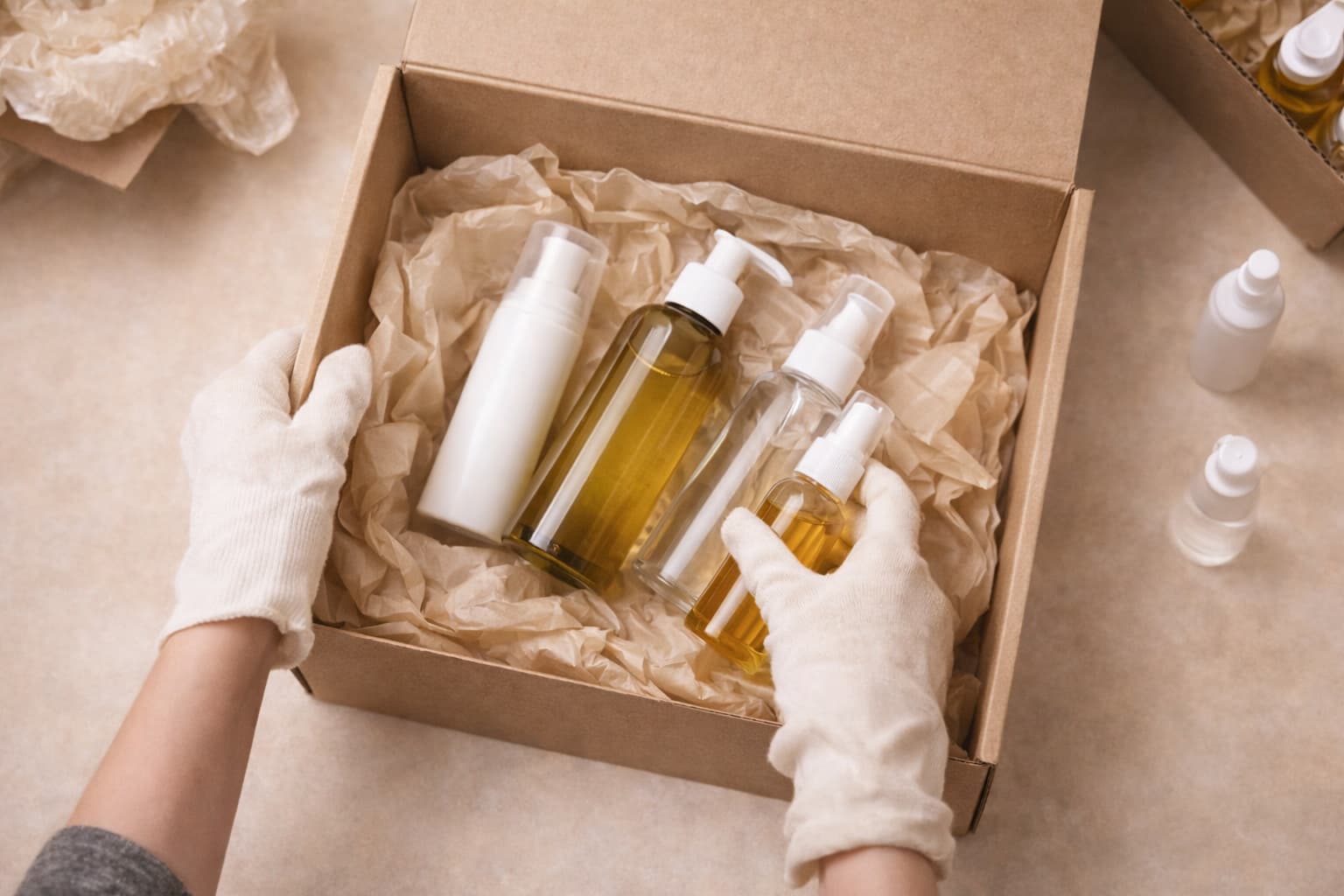
Professional packaging with gloves – GMP applies even on a small scale
Clean, separate working area
Keep production separate from everyday life. A clean table in a separate room is enough – but not the kitchen while you are cooking.
Disinfected tools & containers
Disinfect all equipment, spatulas, jars and containers before use with 70% isopropanol, or boil them out.
Wear protective clothing
Disposable gloves, a clean apron, hair tied back. No jewellery on your hands.
Documented cleaning records
Note down when, how and with what you cleaned your working area and your tools. The safety assessor and the authorities want to see this.
Keep batch documentation
Every production batch gets a unique number. Document: date, raw materials with LOT numbers, quantities, manufacturing steps, temperature, pH value.
Raw material storage
Store oils cool and dark, water-based raw materials in the fridge. Label all raw materials with the date of receipt and LOT number.
Insurance: product liability cover is a must!
As a cosmetics manufacturer you are personally liable for damage caused by your products – under EU product liability law there are no exceptions for small manufacturers. Product liability insurance is therefore not optional, but essentialfor anyone who wants to register a small cosmetics business.
Which insurance policies do you need?
| Insurance | Mandatory? | Cost/year | Why it matters |
|---|---|---|---|
| Product liability | Strongly recommended | 200–500 € | Covers personal injury caused by your products |
| Public liability | Recommended | 100–300 € | Covers damage at market stalls, trade fairs etc. |
| Legal expenses | Optional | 150–400 € | For cease-and-desist letters or legal disputes |
Practical tip: combined policies
Many insurers offer combined product and public liability policies for small manufacturers from around 300 €/year. Make sure “cosmetic products” are explicitly listed in the policy – some standard policies exclude cosmetics.
The safety assessment is another significant cost factor. Exactly what the toxicologist checks and what it costs is explained in our guide to safety assessment.
Taxes: small-business VAT scheme, yes or no?
After registering your business, the tax office sends you the form for tax registration. This is where you make an important decision: do you use the small-business VAT scheme available in your country, or not?
The small-business VAT scheme: the basics
- Requirement:last year’s turnover below the small-business threshold in your country andthis year’s turnover likely to stay below the applicable limit as well
- Advantage: you do not have to add VAT to your invoices or file periodic VAT returns
- Disadvantage: you cannot reclaim input VAT on your purchases (e.g. for raw materials, packaging, the safety assessment)
| Criterion | Small-business scheme | Standard VAT |
|---|---|---|
| VAT on invoices | No | Yes (standard rate) |
| Input VAT deduction | No | Yes |
| Periodic VAT returns | Not required | Monthly or quarterly |
| Ideal for | End consumers (B2C) | Business customers (B2B) |
Our recommendation
As a cosmetics starter you usually sell to end consumers (B2C) – at markets, through Etsy or in your own shop. Where it is available, the small-business VAT scheme is almost always the right choice here. You save yourself the administrative burden and can offer lower prices, because you do not have to add VAT on top.
Other tax obligations
- Income tax:your profit is taxed at your personal income tax rate – even under the small-business scheme
- Local business tax: some countries levy a local business or trade tax, often only above a certain profit level. Check whether and from what point it applies where you live
- Simple accounts: as a small business, simple cash-basis accounting is usually enough. Bookkeeping tools make this easy
Checklist: everything you need before your first sale
Before you sell your first product, these points need to be done. Use this checklist as your personal roadmap when you want to register a small cosmetics business and get going:
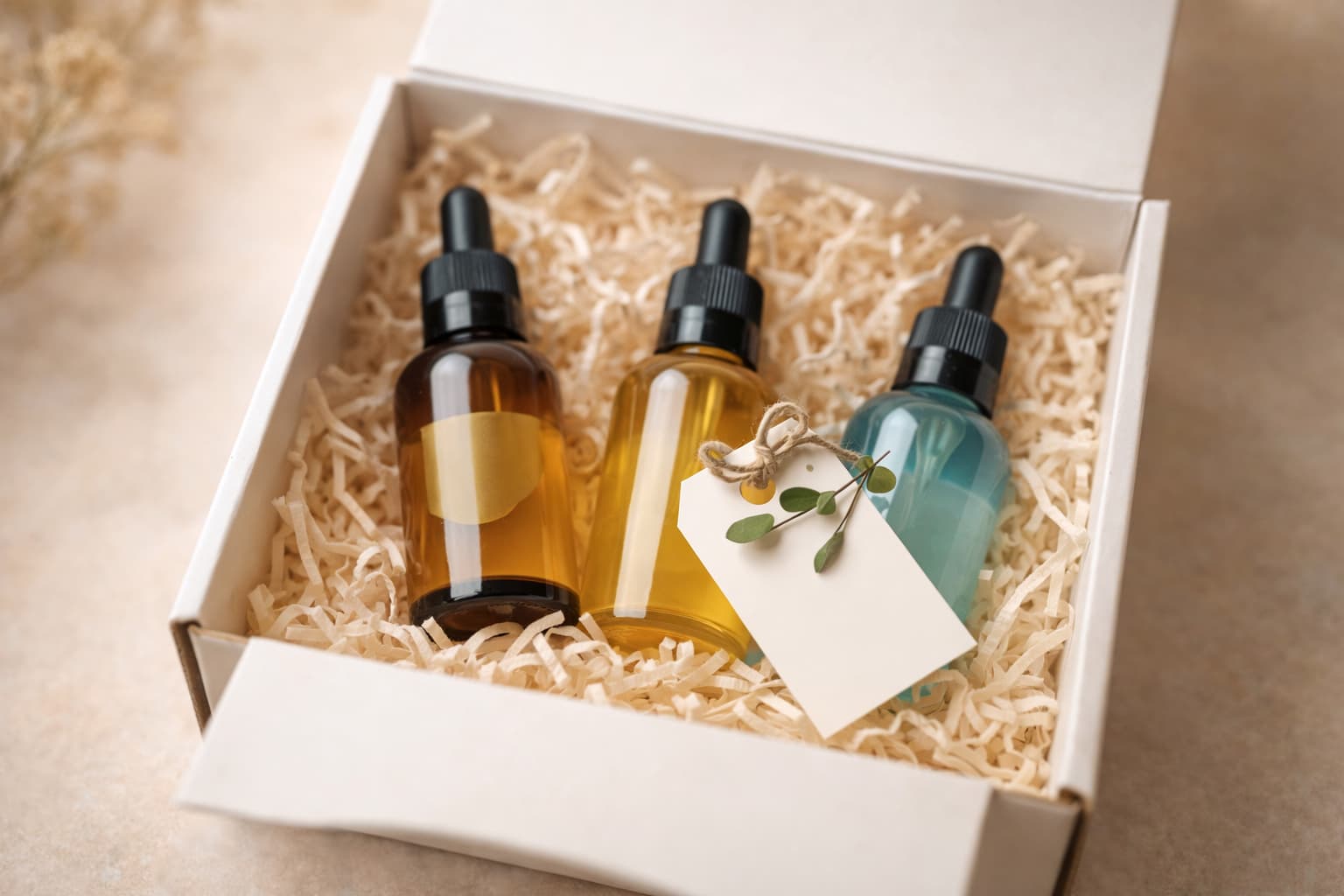
Sale-ready: well-packaged products from your own home workshop
Business registered
Registration form completed, activity: “manufacture and sale of cosmetic products”
Registered with the tax office
Tax registration form submitted, small-business VAT scheme chosen where available (or deliberately declined)
Product liability insurance in place
Policy covers “cosmetic products”, cover of at least 3 million € for personal injury
GMP-compliant working area set up
Separate, clean area, disinfected tools, cleaning records ready
Safety assessment commissioned
A toxicologist commissioned for every formulation – without a CPSR nothing may be sold
INCI list created
Correct INCI declaration for every product – in descending order by percentage by weight
Label with all 8 mandatory details
Product name, company + address, nominal content, best-before date/PAO, precautions, batch number, INCI list, country of origin
CPNP notification submitted
Every product notified in the Cosmetic Products Notification Portal – before the first sale
PIF assembled
Product Information File with formulation, CPSR, stability data, GMP evidence and label
Detailed instructions for the individual steps can be found in our articles on the INCI list, on building the PIF and on the CPNP notification. The complete five-step process is explained in our guide to selling legally.
Frequently asked questions (FAQ)
Do I need to register a business if I only sell cosmetics at markets?
Yes. As soon as you sell cosmetic products regularly and with the intention of making a profit, that counts as a commercial activity – whether at a weekly market, through Etsy or in your own online shop. In most countries registering a business is inexpensive and quick; check the exact procedure and fee with the relevant authority in your country.
Can I sell cosmetics as a freelancer?
In most jurisdictions, no. Manufacturing and selling cosmetics is generally treated as a commercial (trading) activity rather than a liberal profession, so you normally have to register as a business or trader. Even if you develop the formulations yourself, selling physical products is treated as commercial. Check how your own country classifies the activity.
Do I have to register my cosmetics business with a health authority?
There is generally no separate mandatory registration with a health authority specifically for cosmetics manufacturers. However, the competent market-surveillance or trading-standards authority in your country can carry out inspections. In some regions you are contacted automatically after registering your business. It is a good idea to get in touch proactively and clarify the status of your premises.
Am I allowed to make cosmetics in my kitchen?
In principle yes, as long as you meet the GMP requirements of ISO 22716. That means: a separate, clean working area (not while you are cooking), disinfected tools, documented cleaning records and protective clothing. A dedicated room or a partitioned-off area is ideal, but not strictly mandatory.
What does it cost in total to start a home cosmetics business?
The fixed costs before your first sale are roughly 500–1,500 €. Business registration itself is usually only a small fee; around 300–800 € goes on the safety assessment, 100–300 € on raw materials and packaging, and 200–500 €/year on product liability insurance. A small-business VAT scheme – available in many countries – can save you VAT paperwork at the start.
Conclusion: a registered business for cosmetics made at home – easier than you think
Registering a business for cosmetics made at home is the easiest part of the whole thing: a few minutes, one form, a small fee. The real work lies in preparing your products – safety assessment, INCI list, GMP-compliant manufacturing and CPNP notification. But do not let that put you off: thousands of micro-producers across Europe have successfully mastered exactly this path.
Start as a small business, protect yourself with product liability insurance, use a small-business VAT scheme where it is available and work in a GMP-compliant way from the very beginning. That way you lay a solid foundation for your cosmetics business – whether as a side business or later as your main occupation.
Further resources
Want to document your formulas and INCI lists professionally?
INCIkit brings formulas, INCI declaration and batch documentation into one app — free for 14 days, no credit card required.
INCIkit Editorial
Cosmetics Compliance Desk
More articles
Starting Your Own Cosmetics Brand: From Idea to Finished Brand
Want to start your own cosmetics brand? This hands-on guide shows you the way step by step — from brand concept and logo through product line and packaging to distribution, marketing and a realistic cost overview.
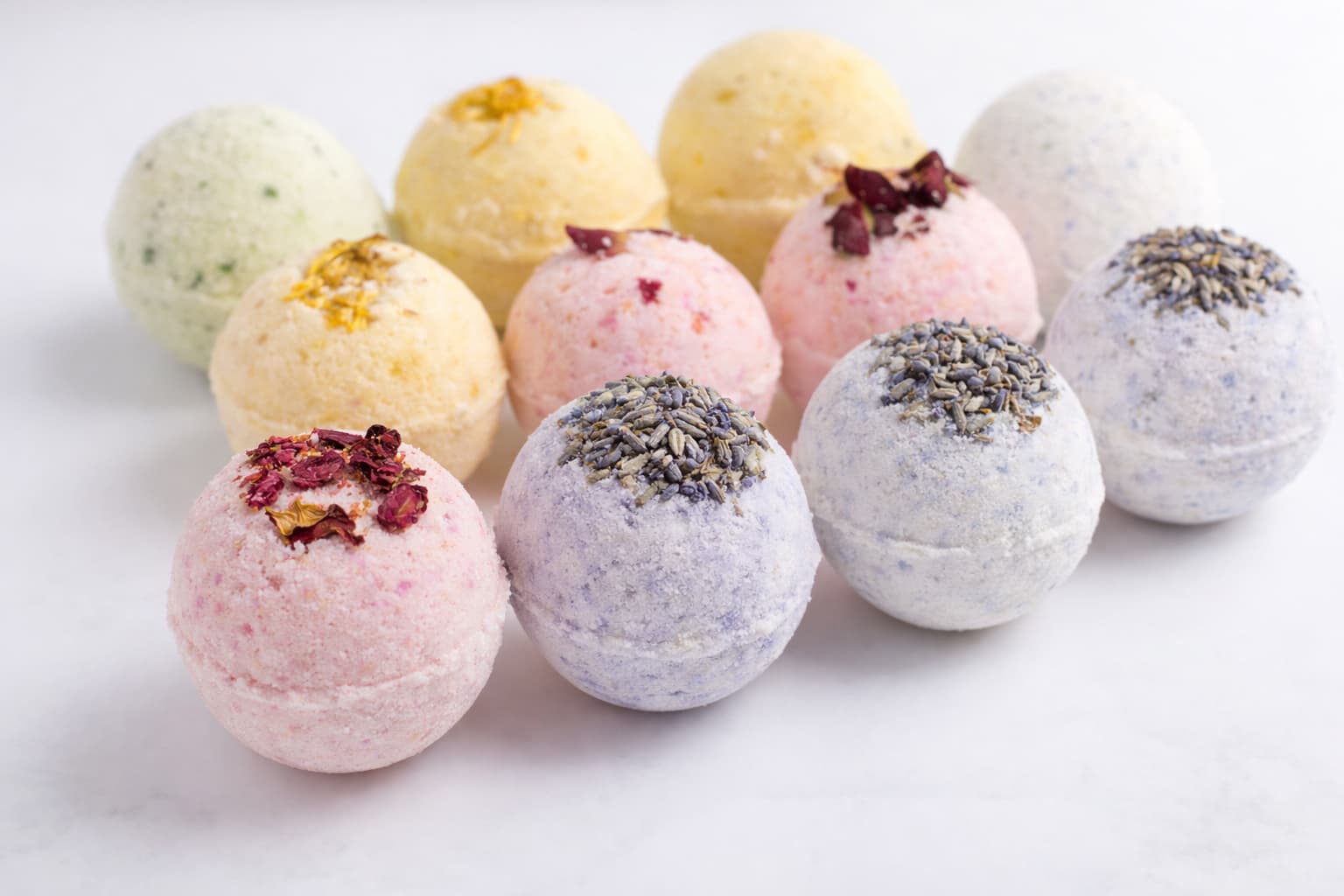
Lip Balm, Bath Bombs & Co: The Best Starter Products for Your Cosmetics Business
Which cosmetic product is the easiest to start with? We compare 6 categories — from lip balm through bath bombs to body oils — by complexity, cost, shelf life and regulation.
Labels for Handmade Cosmetics: Mandatory Details & Design Tips
Your cosmetic label must not only look good — it must also contain 8 mandatory legal details. This practical guide shows you which details are mandatory, how to design professional labels and where to have small runs printed.