
Selling Homemade Cosmetics Legally: The Complete Beginner's Guide
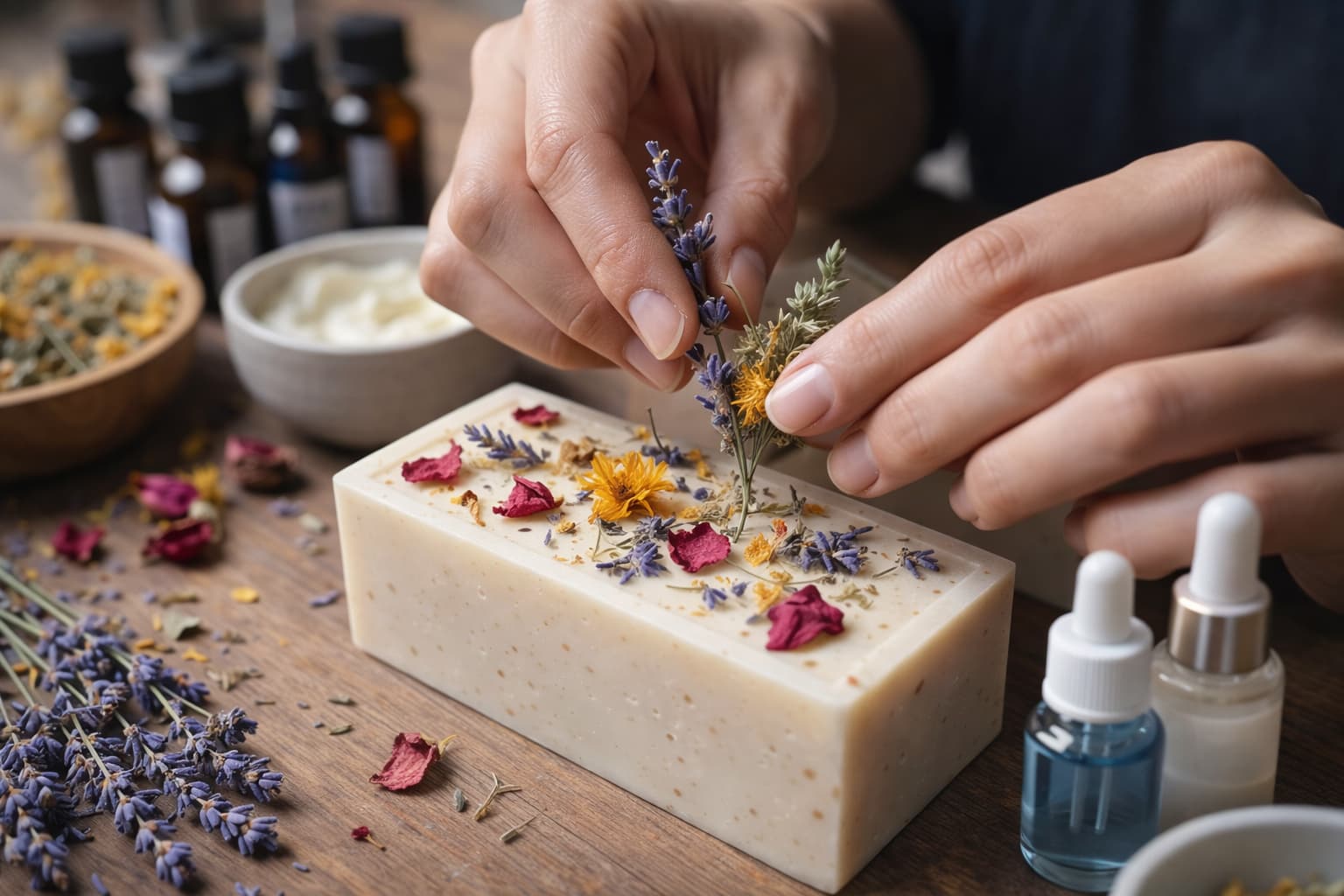
You’ve developed the perfect cream, your soaps are a hit with friends and family — but are you actually allowed to sell them? The short answer: yes, you may make and sell your own cosmetics. The slightly longer answer: there are five legal hurdles you have to clear first. This guide shows you, step by step, how to bring your handmade cosmetics to market legally — without the legal jargon, but with concrete costs, real-world examples and a checklist to tick off.
The 5 legal hurdles at a glance
Before you can sell your homemade cosmetics, you must fulfil five obligations. The EU Cosmetics Regulation (EC) 1223/2009 applies to every cosmetic product — whether you sell 10 units at a Christmas market or 10,000 through your online shop. There is no exception for small quantities or hobby makers.
| Step | What you need to do | Typical cost | Time required |
|---|---|---|---|
| 1. Business | Register your business with the local authority | 20 – 60 € | 1 – 2 days |
| 2. Safety assessment | A toxicologist assesses your product | 300 – 800 € | 2 – 8 weeks |
| 3. CPNP notification | Register the product in the EU portal | 0 € | 1 – 3 hours |
| 4. Label & INCI | Mandatory details on the packaging | 50 – 200 € | 1 – 2 days |
| 5. Create the PIF | Set up the Product Information File | 0 – 500 € | 1 – 5 days |
Important
These five steps apply to all cosmetic products — soaps, creams, lip care, bath bombs, body oil and everything else that falls under Art. 2 of the EU Cosmetics Regulation. You can read more about the latest changes to the Cosmetics Regulation in 2026 in our separate article.
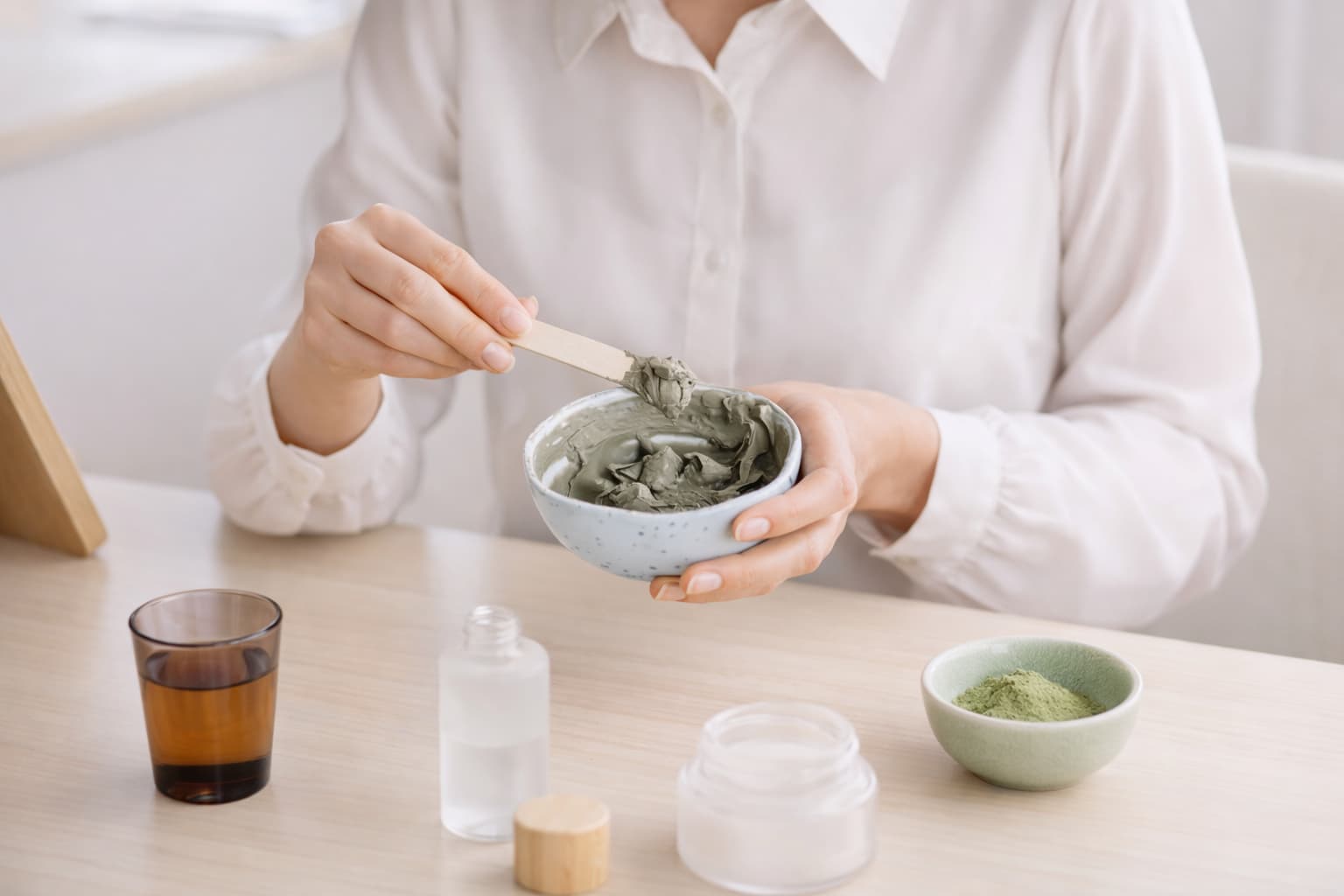
Making homemade cosmetics – from hobby to business
Step 1: Register your business
Sole trader or a formal company?
If you want to make and sell cosmetics, you need a registered business. This applies even if you only sell a few soaps on the side via Etsy. Registering a business is straightforward and, in most places, done within a day.
What you need:
- ID card or passport
- A completed registration form — available from your local authority or online
- A fee of 20 to 60 € (depending on the local authority)
Sole trader vs. company: For most beginners the simplest sole-trader route is the best choice. You avoid double-entry bookkeeping and annual financial statements, and in many EU countries you can benefit from a small-business VAT scheme if your turnover stays below the national threshold. That means: no VAT on your invoices.
Description of activity — what to watch out for
When you register your business, you provide a description of your activity. Don’t simply write “cosmetics”. Be precise, for example:
Manufacture and sale of cosmetic products (soaps, creams, body-care products)
Do I have to notify a health authority?
In many EU countries the business registration office automatically informs the responsible health authority. In some regions — depending on national rules — an initial inspection of your production site takes place. The health authority checks basic hygiene standards: separate storage and production areas, clean work surfaces, documented cleaning processes.
Practical tip
Even if you produce from home, you should set up a separate, clean working area. Using the kitchen is possible in principle, but you need a clear separation between food preparation and cosmetics production. You can find more on hygiene standards in our GMP guide for cosmetics.
Step 2: Commission a safety assessment
Why the safety assessment is mandatory
The safety assessment is the most important — and most expensive — hurdle when you want to sell homemade cosmetics. Art. 10 of the EU Cosmetics Regulation requires that every cosmetic product be assessed by a qualified safety assessor before it is placed on the market.
What the safety assessor checks:
- The toxicological profile of every single ingredient
- Concentrations in relation to the permitted maximum levels
- Interactions between the ingredients
- The stability of the product
- Microbiological safety (particularly for water-containing products)
- Assessment of the finished product under its intended use
Costs and process
The cost of a safety assessment is typically between 300 and 800 € per product. The price depends on the complexity:
| Product type | Price range | Duration |
|---|---|---|
| Simple soap (3–5 ingredients) | 300 – 400 € | 2 – 4 weeks |
| Cream/lotion (8–15 ingredients) | 500 – 700 € | 4 – 6 weeks |
| Complex formulation (15+ ingredients) | 600 – 800 € | 4 – 8 weeks |
Money-saving tip:If you have several products with a similar base formulation (e.g. soaps with different fragrances), many toxicologists offer discounts for product families. A lavender soap and a rose soap with an identical base formulation together often cost only 450–550 € instead of 2×350 €.
You can find a detailed article on the whole process in our guide to the safety assessment of cosmetic products.
Which documents do you need?
- Complete formulation with INCI names and concentrations (as percentage by weight)
- Safety data sheets (SDS) for all raw materials
- Technical data sheets (TDS) for the raw materials
- Stability data— at least one test over 3 months
- Manufacturing description— how do you make the product?
- Packaging details— material, volume, closure type
Common mistake
Many beginners commission the safety assessment before they have all the documents together. This delays the process by weeks. Prepare all documents before you contact the toxicologist.
Step 3: Submit the CPNP notification
The Cosmetic Products Notification Portal (CPNP) is the central EU database for cosmetic products. Before you sell your product in the EU for the first time, you must notify it there. The notification is free of charge and is done online.
The CPNP notification is a legal obligation under Art. 13 of the EU Cosmetics Regulation. Breaches can result in substantial fines — even for small producers.
Step-by-step process
- Register on the European Commission’s CPNP portal
- Create a profile as the “Responsible Person”
- Create a new product
- Add the INCI list and frame formulation
- Upload the label as an image
- Check all details and submit the notification
The whole process takes approx. 1–3 hours if you have prepared all the documents. You can find detailed instructions in our CPNP notification guide.
Real-world example
Sabine makes hand-stirred shea butter body bars and sells them through her Etsy shop. For her first product she needed 2.5 hours for the CPNP notification — most of the time went into correctly assigning the INCI categories. For her second product it took only 45 minutes.
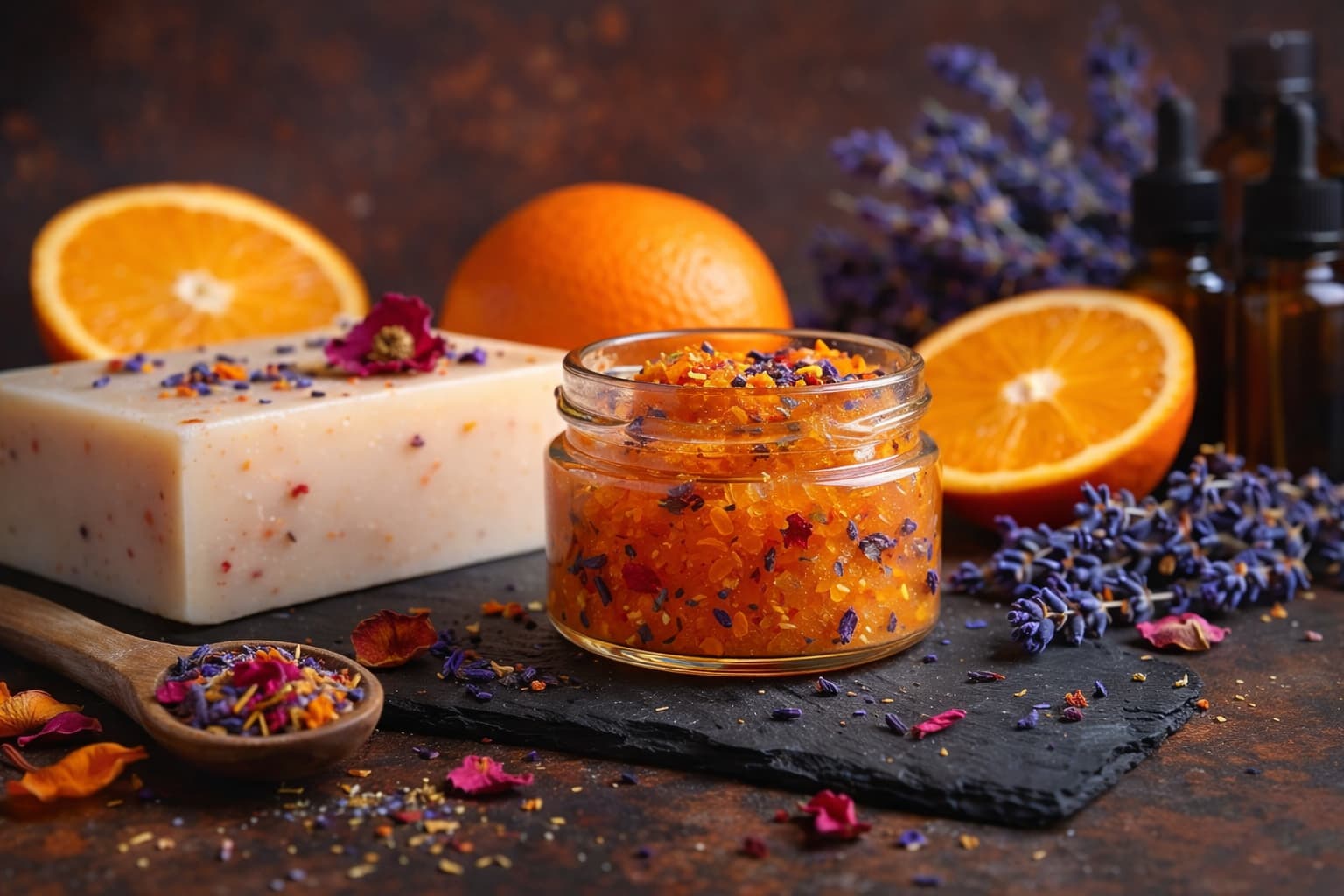
Cosmetic raw materials – every ingredient must appear on the INCI list
Step 4: Create the label & INCI list correctly
The 8 mandatory details on your label
Your product label is the showcase of your handmade cosmetics — but it is also a legal document. Art. 19 of the EU Cosmetics Regulation sets out precisely which information must appear on the packaging:
- Function of the product(e.g. “hand soap”) — unless obvious
- Name and address of the Responsible Person
- Nominal content(e.g. “100 g” or “50 ml”)
- Minimum durability date or PAO symbol(open jar, e.g. “12M”)
- Special precautions
- Batch number
- INCI list (complete listing)
- Country of origin (for imports from outside the EU)
INCI list: how to create it correctly
- Above 1 % concentration: sorted in descending order by percentage by weight
- Below 1 % concentration: any order
- Colourants: right at the end, with CI number
- Fragrances:grouped as “Parfum”, with the 26 fragrance allergens declared individually
INCI example: natural soap
Sodium Olivate, Sodium Cocoate, Aqua, Glycerin, Sodium Hydroxide, Cocos Nucifera Oil, Lavandula Angustifolia Oil, Linalool, Limonene
Our step-by-step guide to the INCI list explains all the details, special cases and common mistakes.
Font size and space on small packaging
The minimum font size for the INCI list is 1.2 mm x-height. For packaging below 10 ml or 10 g there are exemptions: certain details may be provided on an enclosed leaflet or displayed at the point of sale.
Step 5: Compile the PIF
The Product Information File (PIF) is the central compliance document for every cosmetic product. You must be able to present it at any time when an authority requests it. Under Art. 11, the PIF must be kept for at least 10 years.
What belongs in the PIF?
Part A — safety assessment: safety report under Annex I, qualitative and quantitative composition, toxicological profile, stability data, microbiological quality and the safety assessor’s overall assessment.
Part B — product dossier: product description, manufacturing description, proof of GMP compliance, evidence for claimed effects and proof that no animal testing was carried out.
You can find detailed instructions in our practical PIF guide.
PIF for beginners: a pragmatic approach
- Start with the formulation: all ingredients with INCI names, concentration and supplier
- Collect raw-material documentation: SDS and TDS from all suppliers
- Obtain the safety assessment:the toxicologist supplies Part A
- Describe the manufacturing process: document it step by step
- Bring it all together: compile the PIF in a single folder (digital or physical)
Handle steps 2–5 digitally
INCIkit helps you manage formulations, generate INCI lists automatically and document batches without gaps — saving you hours of manual work on the PIF and the CPNP notification.
Common beginner mistakes & how to avoid them
Anyone making and selling their own cosmetics for the first time often falls into the same traps. Here are the seven most common mistakes:
Selling without a safety assessment
Market surveillance authorities carry out regular checks – including at markets and on small online shops. Without a safety assessment you risk fines and a sales ban.
INCI list with trivial names
“Olive oil” is wrong – the correct term is “Olea Europaea Fruit Oil”. The INCI list must use the standardised INCI names.
Not assigning a batch number
Every production lot needs a unique batch number. Best practice: a system such as “YYMMDD-NN” (e.g. 260312-01).
Claims without evidence
“Heals eczema” is a medical claim and prohibited for cosmetics. “Cares for dry skin” is permitted – but must be substantiated in the PIF.
Forgetting the CPNP notification or filling it in incorrectly
Particularly common: the wrong product category selected, an incomplete INCI list uploaded or the label image missing.
Forgetting preservation for water-containing products
As soon as your product contains water, you need a preservative system. Without preservation, bacteria and mould can multiply.
No stability test
Store samples at room temperature, at 40 °C and at 4 °C. Check after 4, 8 and 12 weeks for changes (colour, smell, consistency, pH value).
Checklist: from hobby product to legal sales
Before you sell your first product, work through this checklist. If you can tick off every point, you are on the legally safe side:
- Business registered (registration document on file)
- Safety assessment on file for every product (toxicologist's report)
- CPNP notification submitted for every product
- INCI list created with correct INCI names
- Label designed with all 8 mandatory details
- PIF fully compiled and archived
- Batch-number system defined and applied
- Stability tests carried out and documented
- Manufacturing process described in writing
- Raw-material documentation (SDS, TDS) on file for all ingredients
- Best-before date or PAO symbol on the label
- Product liability insurance taken out (recommended, from approx. 200 €/year)
- Storage and production areas set up hygienically
- Cleaning records introduced
How long does the whole process take? Realistically, you should allow 6 to 12 weeks, from the decision to the first legal sale. The biggest time factor is the safety assessment (2–8 weeks).
Frequently asked questions (FAQ)
Can I sell cosmetics without registering a business?
No. As soon as you supply cosmetics in exchange for payment — whether at a market, via Etsy or to friends — it counts as a commercial activity, and you need a registered business. The only exception is giving products away without receiving anything in return. As soon as money changes hands, the obligation to register a business applies.
What does it cost in total to sell homemade cosmetics legally?
For your first product, expect total costs of roughly 500 to 1,200 €. This is made up of: business registration (20–60 €), safety assessment (300–800 €), labels and packaging (50–200 €) and, where needed, stability tests (100–300 €). The CPNP notification and the PIF cost only your working time. From the second product onwards it becomes cheaper.
Do I need a separate safety assessment for every product?
Yes. Every single formulation needs its own safety assessment. If you make a lavender soap and a peppermint soap, you need two assessments — even if only the essential oil differs. That said, many toxicologists offer product-family discounts when the base formulation is identical.
Can I make and sell cosmetics from home?
Yes, manufacturing on your own premises is generally permitted. You do not need a certified production facility. However, you must follow the principles of Good Manufacturing Practice (GMP) to ISO 22716: a clean, separate working area, documented cleaning and manufacturing processes, and traceable raw-material storage.
Do I have to have my products tested before I sell them?
The EU Cosmetics Regulation does not prescribe specific product tests — but the safety assessment requires certain data that you can only obtain through testing. This includes stability tests (over at least 3 months) and, for water-containing products, a challenge test (preservative efficacy test).
Conclusion: making and selling your own cosmetics — how to start the right way
Making and selling your own cosmetics is not a bureaucratic adventure once you know the five steps and work through them systematically. Register your business, commission a safety assessment, submit the CPNP notification, design the label correctly and compile the PIF — that is your roadmap from hobby product to legal sales.
The biggest mistake you can make: not starting at all because the bureaucracy is off-putting. In practice, most beginners manage to meet all the requirements within 8 to 12 weeks.
Further resources
Want to document your formulas and INCI lists professionally?
INCIkit brings formulas, INCI declaration and batch documentation into one app — free for 14 days, no credit card required.
INCIkit Editorial
Cosmetics Compliance Desk
More articles
Starting Your Own Cosmetics Brand: From Idea to Finished Brand
Want to start your own cosmetics brand? This hands-on guide shows you the way step by step — from brand concept and logo through product line and packaging to distribution, marketing and a realistic cost overview.
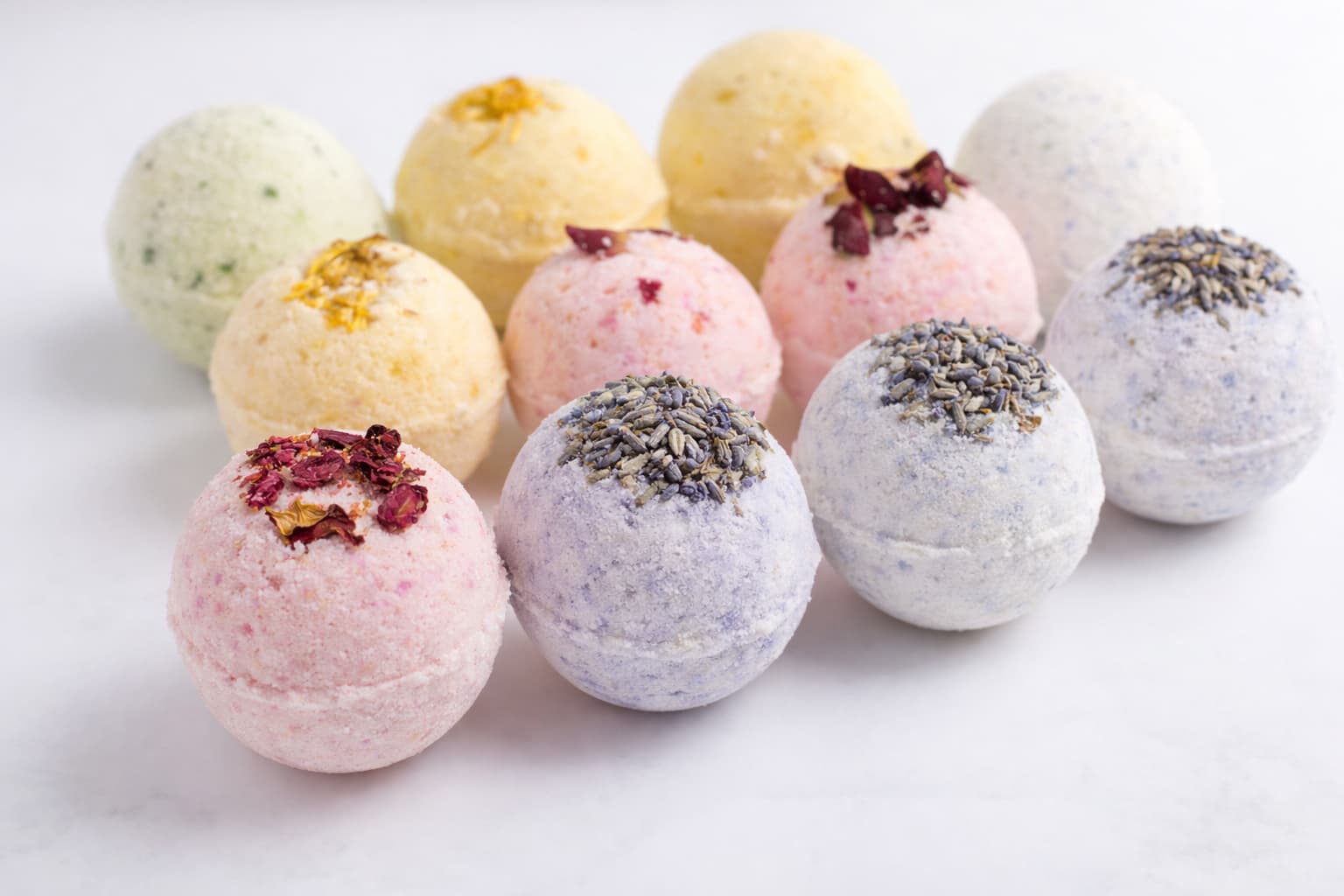
Lip Balm, Bath Bombs & Co: The Best Starter Products for Your Cosmetics Business
Which cosmetic product is the easiest to start with? We compare 6 categories — from lip balm through bath bombs to body oils — by complexity, cost, shelf life and regulation.
Labels for Handmade Cosmetics: Mandatory Details & Design Tips
Your cosmetic label must not only look good — it must also contain 8 mandatory legal details. This practical guide shows you which details are mandatory, how to design professional labels and where to have small runs printed.