
Making and Selling Soap: Everything You Need to Know
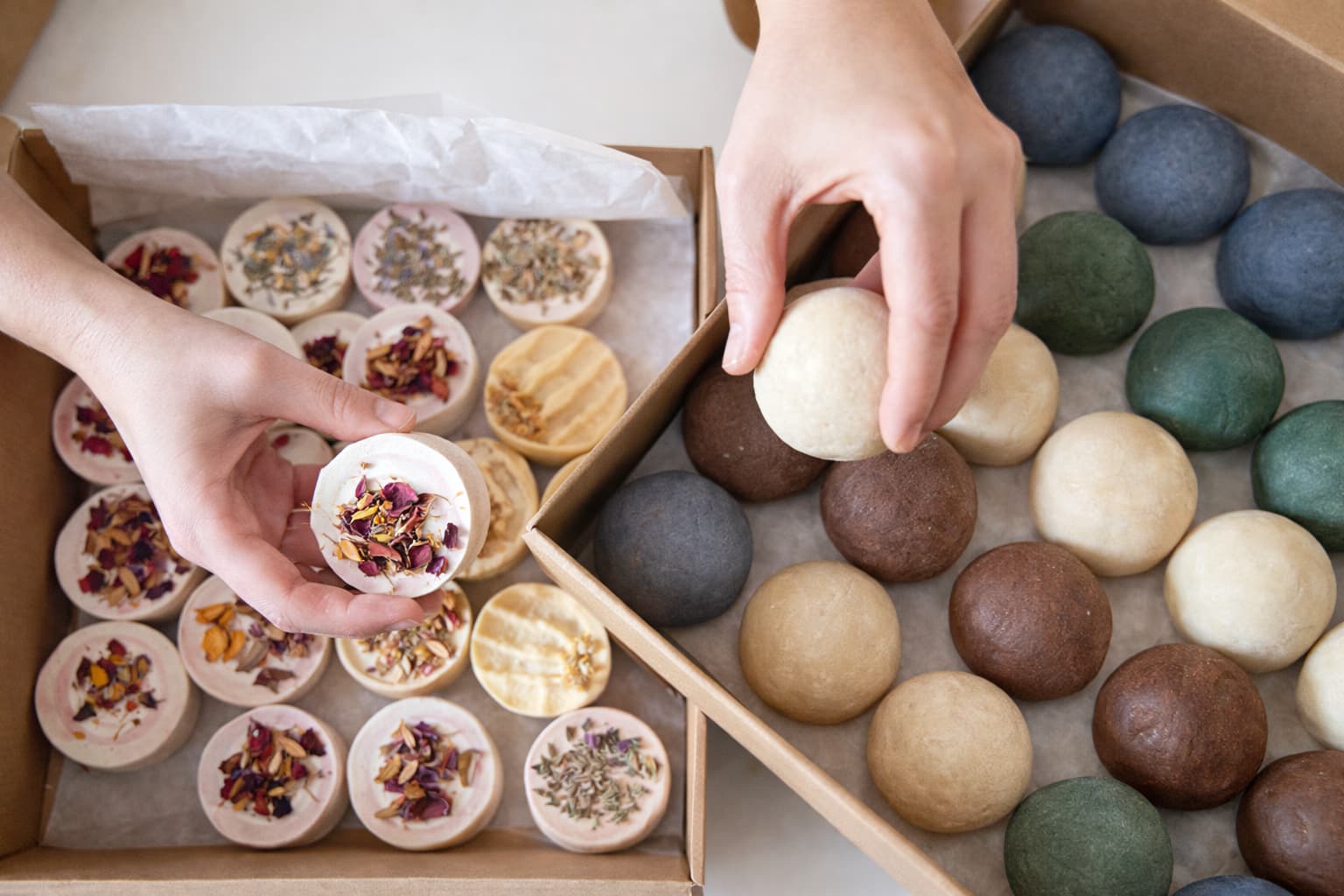
Your soaps are a hit with friends and family – everyone raves about the creamy texture, the natural scent and the lovingly designed packaging. But are you allowed to simply sell your homemade soap at the Christmas market or on Etsy? The good news: yes, you may make and sell your own soap. The important news: soap is a cosmetic product, and clear legal rules apply to it. This guide shows you step by step what you need – from business registration through the INCI list to the CPNP notification. Without legalese, but with concrete costs, practical tips and real examples.
Would you like a general overview of all five steps that apply to every cosmetic product? Then first read our Guide: selling homemade cosmetics legally. This article focuses specifically on the particularities of soap – in particular the special INCI nomenclature for saponification and the labelling of small bar soaps.
Soap = cosmetic product: why the EU Cosmetics Regulation applies to you too
Many hobby soap makers think: “I only make soap, no perfume or lipstick – do I really need all these rules?” The clear answer: yes. The EU Cosmetics Regulation (EC) 1223/2009 defines a cosmetic product as any substance intended to be brought into external contact with the body in order to clean it, perfume it, change its appearance or protect it. Soap meets all of these criteria.
Important to know
There is no quantity threshold and no hobby exemption. Whether you sell 10 bars at the market or 10,000 through your online shop – the same rules for selling soap apply. Even if you give soap away only in exchange for a donation, that can be classed as a commercial activity.
What does this mean in practice? You need five things before you may legally sell your first soap:
| Requirement | Why | Cost |
|---|---|---|
| Business registration | Trade licence required from the first sale | 20–60 € |
| Safety assessment | Proof that your product is safe | 300–800 € |
| CPNP notification | EU product database for poison control centres | Free |
| Label + INCI list | Consumer information, legally required | 30–100 € |
| PIF (Product Information File) | Central compliance file, keep for 10 years | Only your working time |
In what follows we go through each of these points – with a particular focus on the specifics that apply especially to soap makers.
Do I need a business? Small business vs. sole proprietorship for soap makers
As soon as you supply soap for payment, it is a commercial activity. This also applies to selling at the flea market, on Etsy or via Instagram. You need a business registrationat the trade office of your town or municipality. The cost is between 20 and 60 €.
Small business: the simplest way in
Most hobby soap makers start out as a small business. If your annual turnover is below 22,000 €, you can use the small-business scheme(§ 19 UStG). This means:
- No VAT on your invoices
- No advance VAT returns
- Simple cash-basis accounting (EÜR) instead of a balance sheet
- No minimum capital, no commercial register entry required
Practical tip
On the business registration, give your activity as “manufacture and distribution of cosmetic products” – not just “soap making”. That way you are covered if you later also sell body butter, lip balm or bath bombs.
Sole proprietorship or GbR?
To begin with, a sole proprietorship is perfectly sufficient. Only once you produce together with a partner does a GbR (a German civil-law partnership) become relevant. Keep in mind: with both forms you are personally liable with your private assets. A product liability insurance (from approx. 200 €/year) is therefore strongly recommended.
The safety assessment: costs, process and what the toxicologist needs
The safety assessment is the most important – and most expensive – hurdle when you want to make and sell soap. A qualified safety assessor (usually a toxicologist, pharmacist or chemist) reviews your formulation and confirms that the end product is safe under intended use.
What does the toxicologist need from you?
- Complete formulation with all ingredients, INCI designations and percentage proportions
- Safety data sheets (SDS) and technical data sheets (TDS) of all raw materials
- Manufacturing description (cold-process saponification, hot-process saponification, melt-and-pour method)
- Stability data(appearance, odour, pH value after 4, 8 and 12 weeks)
- Intended use (hand soap, body soap, hair soap?)
Costs and timeframe
For a single soap formulation, the cost is 300 to 800 €. Simple soaps with few, well-documented ingredients (e.g. olive, coconut and rapeseed oil) are cheaper than complex formulations with essential oils, fragrance blends or exotic butters. The timeframe is usually 2 to 8 weeks. You will find more details in our safety assessment guide.
Money-saving tip for soap makers
If your soaps share an identical base formulation and differ only in colour and fragrance, ask your toxicologist about a product-family discount. Instead of 5 × 600 € you often pay only 600 € for the base formulation plus 100–200 € for each variant – that is approx. 1,400 € instead of 3,000 €.
INCI list for soap: special features of saponification
The INCI list for soap differs fundamentally from the one for a cream or lotion. The reason: during saponification, fats and oils react with sodium hydroxide (NaOH) or potassium hydroxide (KOH) to form soap + glycerin. The starting materials no longer exist in the end product in their original form.
Raw material vs. saponified product
In INCI nomenclature there is a separate “Sodium” designation (for NaOH soaps) or “Potassium” designation (for KOH soaps) for each oil:
| Raw material (oil) | INCI unsaponified | INCI saponified (NaOH) |
|---|---|---|
| Olive oil | Olea Europaea Fruit Oil | Sodium Olivate |
| Coconut oil | Cocos Nucifera Oil | Sodium Cocoate |
| Sheabutter | Butyrospermum Parkii Butter | Sodium Shea Butterate |
| Rapeseed oil | Brassica Napus Seed Oil | Sodium Rapeseedate |
| Castor oil | Ricinus Communis Seed Oil | Sodium Castorate |
How do I create the INCI list for my soap?
- List the saponification result: all oils in their “Sodium” form, in descending order of their weight proportion in the end product
- List Aqua(water) – even though a large part evaporates in natural soaps, it is part of the formulation
- Add Glycerin– it forms as a by-product of saponification
- List superfatting oils in their unsaponified INCI form (e.g. Olea Europaea Fruit Oil), since they have not reacted
- List additives such as essential oils, colourants and clays at the end in the usual INCI nomenclature
Example: INCI list for a lavender natural soap
Sodium Olivate, Sodium Cocoate, Aqua, Glycerin, Sodium Shea Butterate, Olea Europaea Fruit Oil, Lavandula Angustifolia Oil, Linalool, Limonene, CI 77742
You will find detailed rules on concentration limits, fragrance declaration and correct ordering in our INCI list guide.
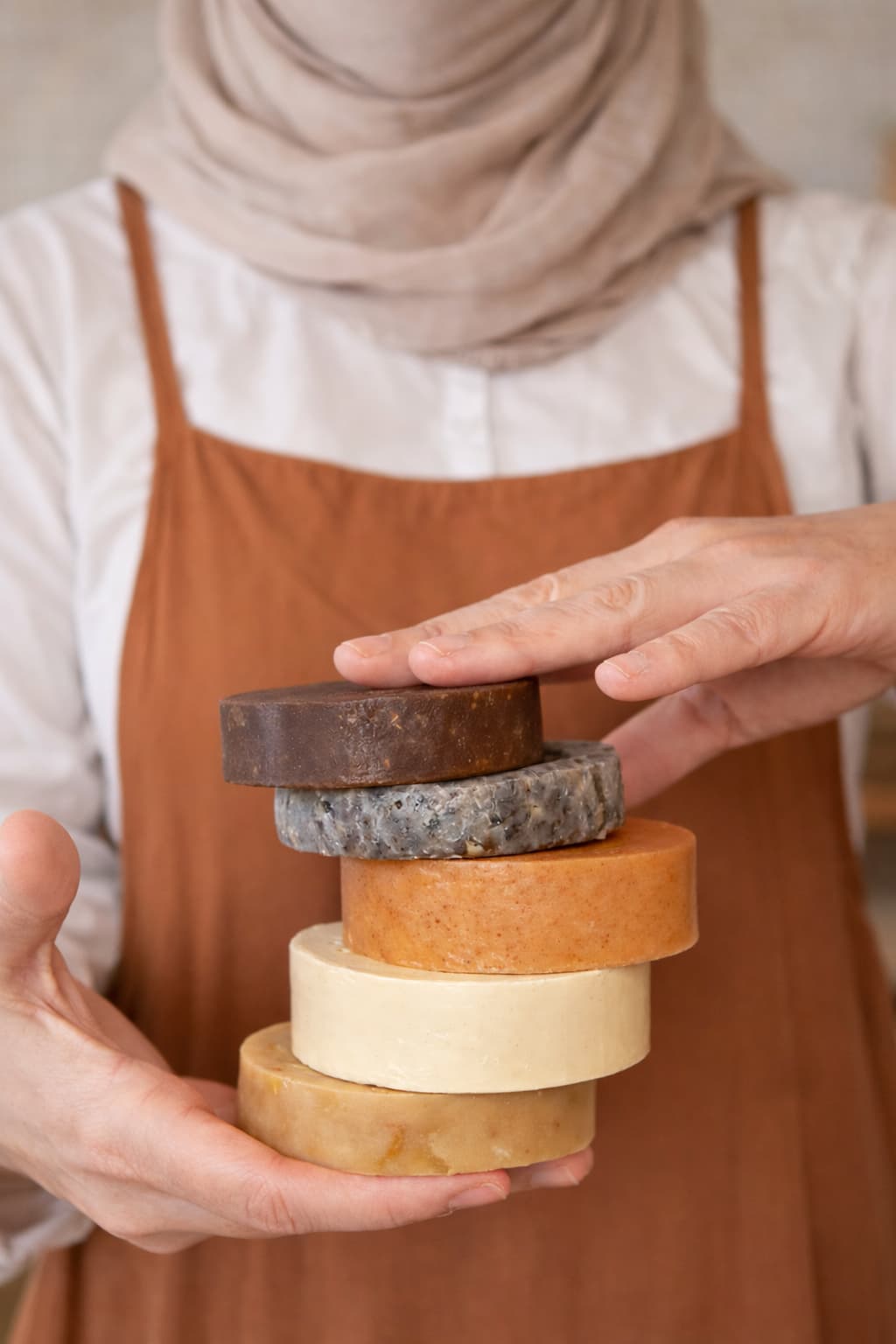
Various natural soaps – each formulation needs its own INCI list
Create the INCI list for your soap in 5 minutes
INCIkit helps you automatically assign the correct INCI designations for saponified oil, manage formulations and document batches without any gaps.
CPNP notification for soaps – step by step
The Cosmetic Products Notification Portal (CPNP) is the EU database in which every cosmetic product must be notified before being placed on the market. The notification is free, but mandatory.
How to notify your soap in the CPNP
- Create an account: Register with EU Login and request access to the CPNP portal
- Choose the product category:For solid soaps, select “Bar Soap” under “Skin Cleansing Products”
- Upload the frame formulation: You can use the predefined frame formulation for soaps or enter your own individual formulation
- Upload the label image: A photo or design draft of your finished label
- Specify the Responsible Person: That is you as the trader
Common mistake
Many soap makers choose the wrong product category (e.g. “Hand Wash” instead of “Bar Soap”). That can cause problems during an inspection. Check the category carefully.
You will find detailed instructions with screenshots in our CPNP notification guide. The whole process takes about 1 to 3 hours, if you have all the documents prepared.
Label: mandatory details on small soap labels
Under Art. 19 of the EU Cosmetics Regulation, your soap’s label must contain the following information:
Function
e.g. “hand soap” or “body soap” – if not obvious
Name and address
of the Responsible Person (i.e. your company + address)
Nominal content
in grams for solid soaps (e.g. “100 g”)
Best-before or PAO
Best-before date (hourglass symbol) or PAO (open-jar symbol, e.g. “12M”)
Precautions
e.g. “avoid contact with eyes” for essential oils
Batch number
Unique batch number (e.g. “260317-01”)
INCI list
Complete list of all ingredients in INCI nomenclature
Country of origin
Only for imports from outside the EU
Lack of space on small soaps
Handmade bar soaps are often small – 50 to 100 g. Not all details always fit on a label of 5 × 3 cm. The minimum font size for the INCI list is 1.2 mm x-height. For packaging under 10 g you may move certain details onto a package insert or a notice at the point of sale. For most bar soaps (50–100 g), however, all details must appear on the label.
Practical tip: wrapper band + insert
Many soap makers use a wrapper band around the soap with the most important details (name, weight, batch number) and a printed insert with the INCI list and address. As long as both are inseparably connected to the product (e.g. shrink-wrapped in film or as a hang tag), this is permissible.
Sales channels: market, Etsy, your own shop – which suits you?
You have produced your soap, all the documents are complete – now it is time to sell. Which channel suits your situation?
| Channel | Advantages | Disadvantages | Start-up costs |
|---|---|---|---|
| Weekly market / Christmas market | Direct customer contact, feedback, low barrier to entry | Stall fees, weather dependency, itinerant trade licence | 50–300 €/market |
| Etsy / Amazon Handmade | Large reach, existing buyer base | Commissions (6.5 % on Etsy), strong competition | 0.20 €/listing |
| Your own online shop | Full control, no commissions, your own brand | Higher effort (SEO, shipping, legal), build your own traffic | 30–50 €/month |
| Retail (zero-waste shops, farm cafés) | Stable sales, local presence | Wholesale prices (50–60 % of RRP), delivery obligations | Samples + sales documentation |
Recommended for beginners: combine market + Etsy
Most successful soap businesses start with a combination: 2–3 local markets per month for direct customer contact and an Etsy shop for the online reach. This way you test your products at the market, gather reviews and build an online presence at the same time. Only once monthly revenue is stably above 1,000 € is your own online shop worthwhile.
Important:No matter which channel you sell through – the documentation obligations stay the same. Every batch sold must be traceable. Our GMP guide to ISO 22716 explains how to comply with Good Manufacturing Practice even as a micro-producer.
Practical example: from the kitchen to a soap workshop
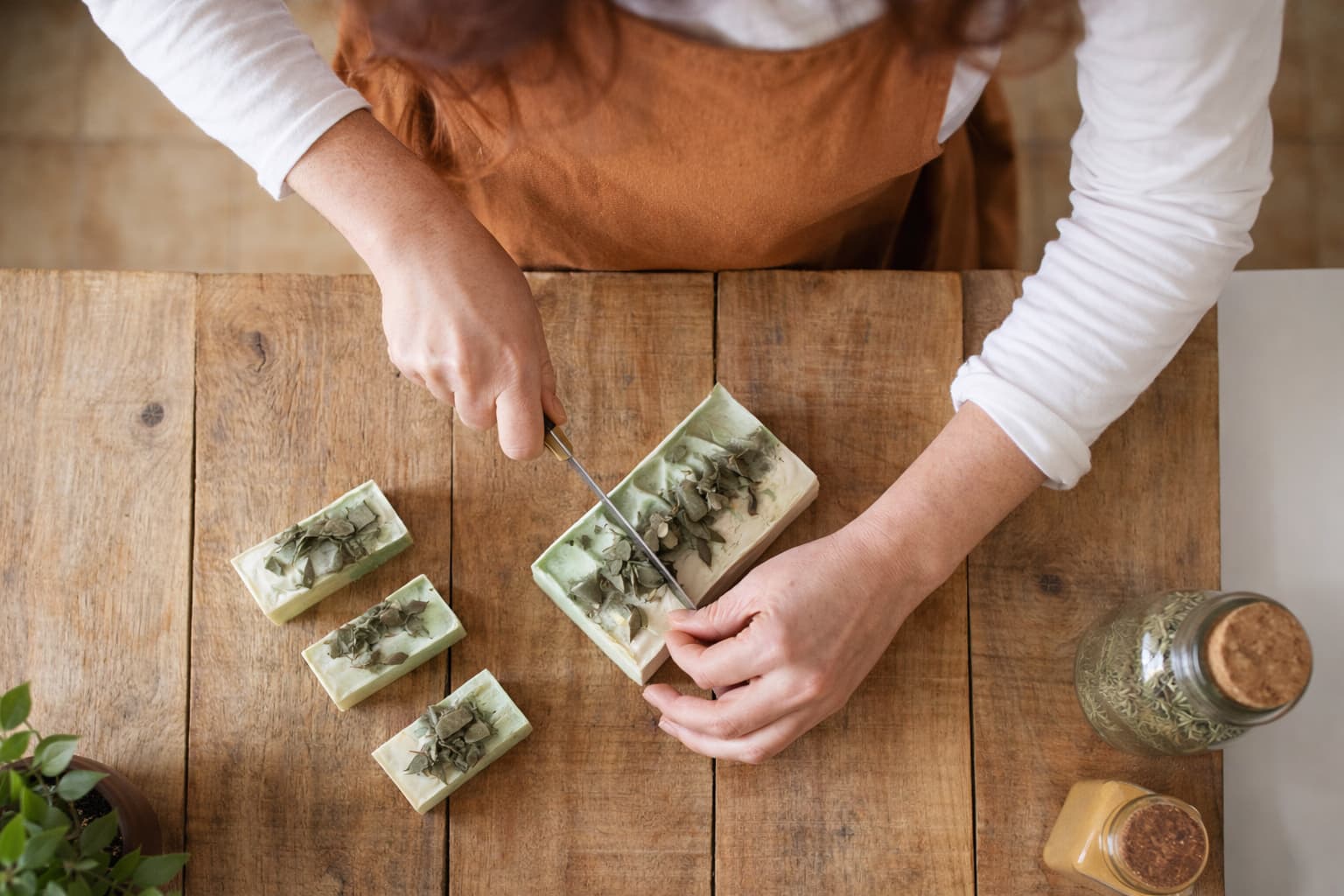
From cutting the soap to the finished product – the path to your own soap workshop
Lisa (32) from Freiburg started making natural soaps in her kitchen three years ago. What began as a hobby for Christmas presents is today a side business with approx. 800 € revenue per month. Here is how she did it:
Perfecting the formulation
Lisa tested 6 different formulations and settled on 3 base formulations: a pure olive oil soap (Castile), a triple-oil soap (olive/coconut/rapeseed) and a shea butter luxury soap. Stability tests over 12 weeks.
Dealing with the paperwork
Business registration (35 €), safety assessment for 3 base formulations as a product family (900 €), product liability insurance (220 €/year). In parallel: created INCI lists and designed labels.
CPNP notification + PIF
Notified 8 products (3 base formulations × different fragrances) in the CPNP. Compiled a PIF for each product in a digital folder: formulation, safety assessment, raw material SDS, manufacturing description, stability data.
First sale
First Christmas market: sold 120 bars of soap (revenue: 840 €). Started an Etsy shop at the same time. Total investment up to the first sale: approx. 1,500 € (incl. raw materials, moulds, paperwork).
A stable side business
8 markets per year, 60 % of revenue via Etsy, 15 different soaps in the range. Thanks to systematic documentation (digital batch traceability, INCI database), Lisa now needs only 2 hours per new product for all the paperwork.
Lisa’s most important tip: “Start with a few formulations and do the paperwork properly once. That saves an enormous amount of time and stress later.”
Frequently asked questions (FAQ)
May I sell homemade soap?
Yes, but only under certain conditions. Soap is a cosmetic product and falls under the EU Cosmetics Regulation (EC) 1223/2009. You need a business registration, a safety assessment by a toxicologist, a CPNP notification, a correct label with an INCI list and a complete Product Information File (PIF). There is no exemption for small quantities or hobby makers.
What does it cost to get a soap approved for sale?
For your first soap product, you should budget 400 to 1,000 €. The largest item is the safety assessment (300–800 €). On top of that come the business registration (20–60 €), labels (30–100 €) and optional stability tests. The CPNP notification is free. From the second product onwards it becomes significantly cheaper, because soaps with a similar base formulation can be assessed at a discount.
Do I need a challenge test for soap without water?
Classic natural soaps (cold-process soaps) contain no free water and have a high pH value that inhibits microbial growth. As a rule, a challenge test (preservative efficacy test) is therefore not required. The safety assessor decides on a case-by-case basis. With liquid soaps or soaps that have water added the situation is different – here a challenge test is almost always mandatory.
What is the difference between Sodium Olivate and Olea Europaea Fruit Oil in the INCI list?
Olea Europaea Fruit Oil is the INCI designation for pure olive oil. Sodium Olivate denotes the sodium salt of the olive oil fatty acids – that is, the product formed when olive oil is saponified with sodium hydroxide. In the INCI list of your finished soap you use Sodium Olivate, not the pure oil, because the raw material has been transformed by the chemical reaction.
Can I sell soap at a Christmas market?
Yes, but you need the same documents as for online sales: safety assessment, CPNP notification, a correct label and a PIF. In addition you need an itinerant trade licence or a fixed market-stall contract. Authorities inspect Christmas markets regularly – a fine for missing documents can amount to several thousand euros.
Conclusion: making and selling your own soap – how you start out right
Making and selling your own soapis absolutely doable – if you know the rules of the game. Soap is a cosmetic product and falls under the EU Cosmetics Regulation. That means: business registration, safety assessment, CPNP notification, a correct label with an INCI list and a complete PIF. The particularity with soap: the INCI nomenclature for saponified oil (Sodium Olivate instead of Olea Europaea Fruit Oil) and the challenge of fitting all mandatory details onto a small label.
The biggest mistake you can make: not starting at all, because the rules put you off. In practice most soap makers manage, within 3 to 5 months, to meet all the requirements. And once you have legally sold your first soap, every further product becomes considerably easier. You will find more on the general steps for all cosmetic products in our overview of the EU Cosmetics Regulation 2026.
Further resources
Want to document your formulas and INCI lists professionally?
INCIkit brings formulas, INCI declaration and batch documentation into one app — free for 14 days, no credit card required.
INCIkit Editorial
Cosmetics Compliance Desk
More articles
Starting Your Own Cosmetics Brand: From Idea to Finished Brand
Want to start your own cosmetics brand? This hands-on guide shows you the way step by step — from brand concept and logo through product line and packaging to distribution, marketing and a realistic cost overview.
Lip Balm, Bath Bombs & Co: The Best Starter Products for Your Cosmetics Business
Which cosmetic product is the easiest to start with? We compare 6 categories — from lip balm through bath bombs to body oils — by complexity, cost, shelf life and regulation.
Labels for Handmade Cosmetics: Mandatory Details & Design Tips
Your cosmetic label must not only look good — it must also contain 8 mandatory legal details. This practical guide shows you which details are mandatory, how to design professional labels and where to have small runs printed.