
How to Create an INCI List: Step-by-Step Guide for Cosmetics Manufacturers
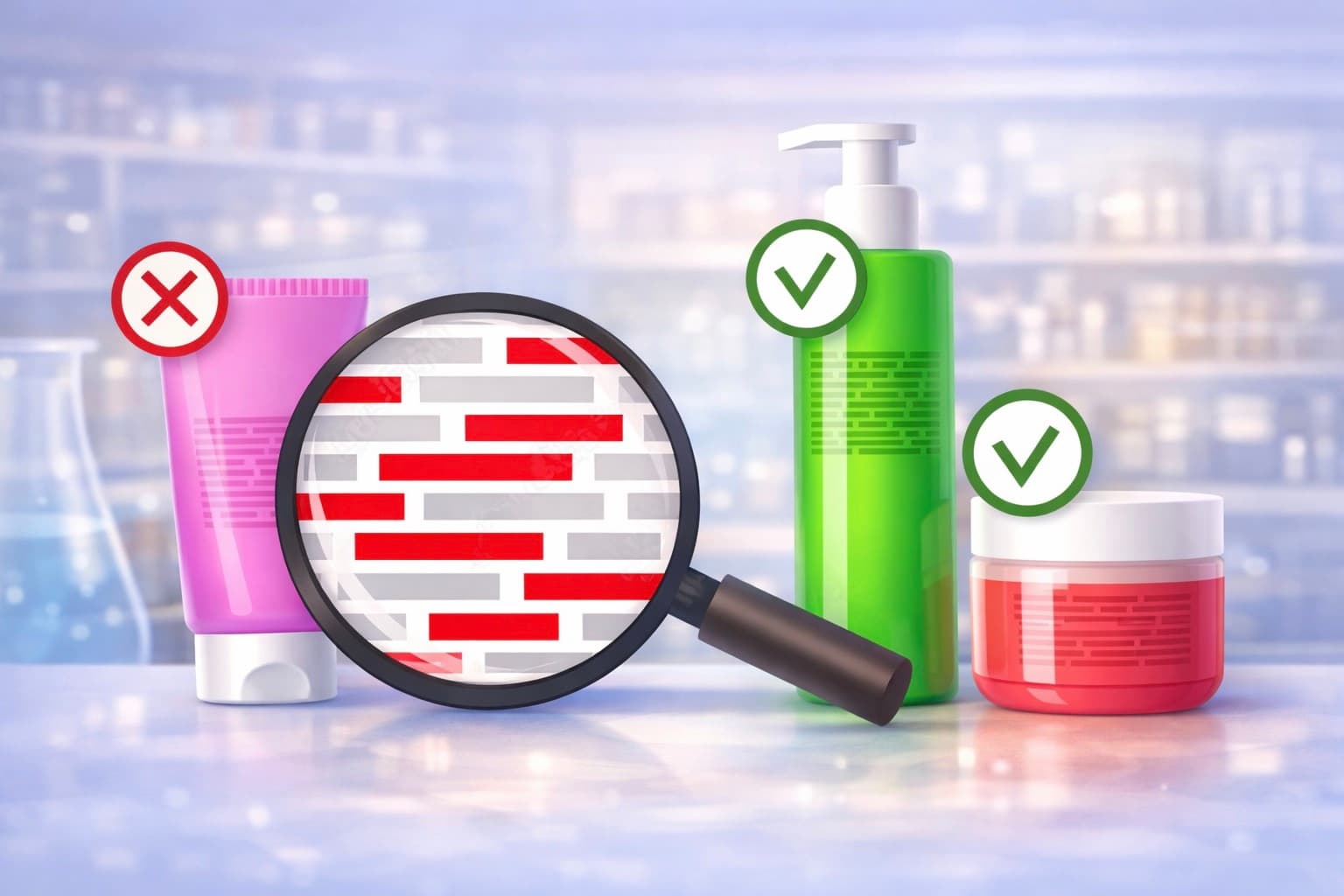
The INCI list is a mandatory element of every cosmetic package in the EU. What looks at first glance like a simple listing of ingredients is in practice one of the most common sources of error in product labelling. An incorrect order, outdated designations, missing allergens or confusing a raw material’s trade name with its INCI name — each of these mistakes can lead to objections from the market surveillance authorities.
For manufacturers working with many formulations and different raw material suppliers in particular, INCI declaration quickly becomes complex. Because the INCI list does not represent the raw materials you purchase — it represents the individual ingredients those raw materials are made of.
This guide explains step by step how to create an INCI list correctly: from the nomenclature and the ordering rules through to the typical pitfalls that regularly cause problems in practice.
What is the INCI nomenclature and why is it mandatory?
INCI stands for International Nomenclature of Cosmetic Ingredients. It is an internationally standardised system for naming cosmetic ingredients, maintained by the PCPC (Personal Care Products Council) and represented in the EU through the European Commission’s CosIng database.
The legal basis for INCI declaration is Art. 19(1)(g) of the EU Cosmetics Regulation (EC) No 1223/2009. In essence, it states: cosmetic products must bear a list of ingredients listed in descending order of weight at the time they are added.
Why this matters for professional manufacturers
The INCI list is not just print on the packaging. It is part of the Product Information File (PIF), the CPNP notification and often the basis for trade partner audits. An error in the INCI list carries through into all downstream documents.
The INCI nomenclature follows fixed rules: chemical compounds are named with their INN- or IUPAC-based English designations. Botanical ingredients follow the botanical nomenclature with a Latin genus and species name, followed by an English descriptor (e.g. “Prunus Amygdalus Dulcis Oil” for sweet almond oil). Colourants are given with CI numbers (e.g. CI 77891 for titanium dioxide).
INCI order in cosmetics: the ordering rules in detail
The order of ingredients in the INCI list is prescribed by law and follows a clear system. Ordering errors are one of the most common reasons for objections — and one of the easiest to avoid.
The 5 ordering rules
Descending order by weight
All ingredients with a percentage above 1 % are listed in descending order of their weight at the time they are added. The ingredient with the highest percentage comes first.
The 1 % threshold: any order below it
Ingredients with a percentage by weight below 1 % may be listed in any order after all ingredients above 1 %. In practice they are often grouped alphabetically or by function.
Colourants at the end with CI numbers
Colourants are listed after all other ingredients and identified by their Colour Index (CI), e.g. CI 77891. Their order among themselves is free.
Fragrances as “Parfum” or “Aroma”
Fragrance compositions are declared collectively as “Parfum” (cosmetics) or “Aroma” (oral care). The 26 allergens subject to mandatory declaration must, however, be listed individually when the concentration limit is exceeded.
Label nanomaterials with “[nano]”
Ingredients in nano form must carry the addition “[nano]”, e.g. “Titanium Dioxide [nano]”. This has applied since the EU Cosmetics Regulation Art. 19(1)(g).
Practical example: the INCI list of a moisturising face cream
A face cream with 8 raw materials consists of considerably more individual ingredients at the INCI level. The following table shows the relationship between the formulation (raw material level) and the INCI list (individual ingredient level):
| Raw material (trade name) | Formulation percentage | INCI individual ingredients |
|---|---|---|
| Water (demineralised) | 68.0 % | Aqua |
| Emulsan II | 8.0 % | Cetearyl Alcohol, Cetearyl Glucoside |
| Refined almond oil | 10.0 % | Prunus Amygdalus Dulcis Oil |
| Glycerine 99.5 % | 5.0 % | Glycerin |
| Unrefined shea butter | 5.0 % | Butyrospermum Parkii Butter |
| Xanthan Gum | 0.5 % | Xanthan Gum |
| Vitamin E oil | 0.3 % | Tocopherol, Helianthus Annuus Seed Oil |
| Preservative K700 | 0.7 % | Phenoxyethanol, Ethylhexylglycerin |
The correct INCI list on the label reads:
Ingredients
Aqua, Prunus Amygdalus Dulcis Oil, Cetearyl Alcohol, Glycerin, Butyrospermum Parkii Butter, Cetearyl Glucoside, Phenoxyethanol, Ethylhexylglycerin, Xanthan Gum, Tocopherol, Helianthus Annuus Seed Oil
Note:Cetearyl Alcohol (from Emulsan II) appears before Glycerin, even though the raw material Emulsan II only accounts for 8 % and Glycerin for 5 %. This is because Cetearyl Alcohol has the larger share within the Emulsan (~6.4 %). Ordering is based on the actual percentage of the individual ingredient in the overall formulation, not on the raw material percentage.
Raw material designation vs. INCI name: a critical difference
One of the most common mistakes in practice: manufacturers transfer the raw material’s trade name directly into the INCI list. This is fundamentally wrong, because raw materials and INCI designations operate on different levels.
Raw material (trade name)
What you buy from the supplier. E.g. “Emulsan II”, “Euxyl PE 9010”, “Tego Care CG 90”. A raw material often contains several individual ingredients.
INCI name (individual ingredient)
What appears on the label. E.g. “Cetearyl Alcohol”, “Phenoxyethanol”. Each individual ingredient within a raw material is declared separately.
This means: before you can create an INCI list, you must break down each raw material into its INCI individual ingredients. You will find the composition on the supplier’s specification data sheet (TDS/SDS) or in the European Commission’s CosIng database.
Practical example: the INCI breakdown of a lip balm
A lip balm with 5 raw materials shows how a few purchasing items give rise to a considerably longer INCI list:
| Raw material | Percentage | INCI breakdown |
|---|---|---|
| Yellow beeswax | 25 % | Cera Alba |
| Cold-pressed jojoba oil | 30 % | Simmondsia Chinensis Seed Oil |
| Deodorised shea butter | 25 % | Butyrospermum Parkii Butter |
| Virgin coconut oil | 15 % | Cocos Nucifera Oil |
| Vitamin E complex | 0.5 % | Tocopherol, Helianthus Annuus Seed Oil |
| Vanilla flavouring | 0.3 % | Aroma |
The correct INCI list:
Ingredients
Simmondsia Chinensis Seed Oil, Cera Alba, Butyrospermum Parkii Butter, Cocos Nucifera Oil, Tocopherol, Helianthus Annuus Seed Oil, Aroma
Note: “yellow beeswax” becomes “Cera Alba”, not “Beeswax” (which would be the US INCI designation, not used in the EU). “Jojoba oil” is not declared as “Jojoba Oil”, but with the full botanical name “Simmondsia Chinensis Seed Oil”.
Declaring cosmetic ingredients: a step-by-step guide
The following 6 steps describe the complete process from formulation to finished INCI list:
Set up the formulation with all raw materials and quantities
The starting point is the complete formulation with all raw materials and their percentage shares of the total product.
Break down each raw material into INCI individual ingredients
Using the supplier specifications, break each raw material down into its INCI components. Individual ingredient percentage = raw material percentage × share within the raw material.
Verify INCI names in CosIng
Check each INCI name against the current CosIng database. Designations change occasionally — e.g. “Hydrogenated Polyisobutene” was updated in 2019.
Order individual ingredients by total percentage
Sort all ingredients above 1 % in descending order. Add together identical ingredients from different raw materials (e.g. Aqua from raw material A + Aqua from raw material B).
Slot in ingredients below 1 % and special groups
List ingredients below 1 % after the ingredients above 1 %. Colourants with CI number at the end. List fragrance allergens separately when limits are exceeded.
Cross-check and release
Check the INCI list against the formulation and specifications. Verify completeness, order and spelling. If the formulation changes, the INCI list must be updated in sync.
Practical tip
The most laborious step is No. 2: the breakdown. With a formulation of 15 raw materials, 5 of which are compositions with 3–8 individual ingredients each, you quickly end up with an INCI list of 30+ entries. This is where a system pays off that stores raw materials once with their INCI components and breaks them down automatically for every new formulation.
Common mistakes in INCI declaration
The following mistakes come up regularly in practice — among small manufacturers as well as established companies:
Trade names instead of INCI names
“Emulgin B2” instead of “Ceteareth-20” on the label. Trade names have no place on the INCI list.
Raw material order instead of individual ingredient order
Raw material A (10 %) sorted before raw material B (8 %), even though an individual ingredient from B has a higher percentage than the largest individual ingredient from A.
Identical ingredients not added together
Aqua appears three times on the INCI list because it occurs in three different raw materials. Correct approach: add up all Aqua shares and list them as a single entry.
Outdated INCI designations
CosIng is updated regularly. Anyone who reuses INCI lists from old templates risks outdated designations that stand out during an inspection.
Missing fragrance allergens
Fragrance declared as “Parfum”, but the allergens it contains (e.g. Linalool, Limonene) are missing even though they are above the limit.
INCI list not in sync with the formulation
The formulation was changed (e.g. a different preservative), but the INCI list on the label was not updated. Result: the label no longer matches the product.
Checklist: creating an INCI list correctly
Use this checklist as a quick reference before you finalise an INCI list:
INCI declaration checklist
Preparation
- Complete formulation with all raw materials and % shares available
- Specification data sheets for all raw materials with INCI breakdown available
- INCI names checked against the current CosIng database
Breakdown & ordering
- All raw materials broken down into INCI individual ingredients
- Identical ingredients from different raw materials added together
- Individual ingredients sorted by actual total percentage (above 1 % descending)
- Ingredients below 1 % listed after the ingredients above 1 %
Special cases
- Colourants with CI numbers at the end of the list
- Fragrance declared as “Parfum” or “Aroma”
- Fragrance allergens listed individually (when above the limit)
- Nanomaterials labelled with “[nano]”
Final check
- No trade names in the INCI list
- Spelling exactly as in CosIng (mind capitalisation)
- List introduced with “Ingredients” (English)
- INCI list matches the current formulation version
You will find a printable version of this checklist in our free templates section.
Conclusion: INCI lists are not an accessory, but mandatory documentation
A correct INCI list is more than print on a label. It is the interface between formulation and consumer, between internal documentation and authority inspection. Mistakes are not just annoying — they can lead to recalls, objections and a loss of trust among trade partners.
The key points in summary:
- INCI declaration is mandatory under Art. 19 of the EU Cosmetics Regulation
- Ordering is based on the individual ingredient percentage in the overall formulation, not on raw material percentages
- Each raw material must be broken down into its INCI individual ingredients
- Identical ingredients from different raw materials are added together
- When the formulation changes, the INCI list must be updated in sync
Anyone working with many formulations and using raw materials with several individual ingredients quickly reaches the limits of manual lists. A system that stores raw materials once with their INCI components and performs the breakdown automatically for every formulation not only saves time — it prevents the typical declaration mistakes.
Generate INCI lists automatically from formulations
INCIkit breaks raw materials down into INCI individual ingredients, sorts by weight and keeps the declaration up to date when formulations change.
FAQ: Frequently asked questions about INCI declaration
Where do I find the correct INCI names for my raw materials?
The official reference is the European Commission's CosIng database (ec.europa.eu/growth/tools-databases/cosing). It lists all approved INCI names. In addition, raw material manufacturers provide the INCI designations of the individual ingredients contained in each raw material on their specification data sheets. For ready-made compositions (e.g. a fragrance oil with 12 individual ingredients), the specification data sheet is the only reliable source for the complete INCI breakdown.
Must I declare every ingredient of a raw material individually?
Yes. INCI declaration is done at the individual-ingredient level, not the raw-material level. If you use a raw material “Emulsan Plus” consisting of Cetearyl Alcohol, Cetearyl Glucoside and Aqua, you must list all three individual ingredients in your INCI list — each in the correct position according to its actual percentage in the overall formulation.
How do I handle ingredients present at less than 1 % in the formulation?
Ingredients with a percentage by weight below 1 % may be listed in any order after all ingredients above 1 %. In practice they are often sorted alphabetically or by functional group (e.g. preservatives, fragrances, colourants). Important: even though their order among themselves is free, they must all still be declared.
May I use trivial names instead of INCI names?
No. Art. 19 of the EU Cosmetics Regulation requires that ingredients be listed according to the INCI nomenclature (International Nomenclature of Cosmetic Ingredients). Trivial names such as “almond oil” or “beeswax” are not correct. The correct INCI designations would be “Prunus Amygdalus Dulcis Oil” and “Cera Alba”. Botanical ingredients follow the botanical nomenclature (Latin genus and species name).
When must I declare fragrance allergens separately?
The 26 fragrances subject to mandatory declaration under Annex III of the EU Cosmetics Regulation (e.g. Linalool, Limonene, Citronellol) must be listed individually in the INCI list when they exceed certain concentration limits: 0.001 % in leave-on products and 0.01 % in rinse-off products. They are listed in addition to “Parfum” or “Aroma”, not instead of them.
Further resources
Creating a PIF — practical guide
The INCI list is part of the PIF. Here is how to create a complete Product Information File.
CPNP notification step by step
The INCI composition is also required for the CPNP notification — here is how to get the notification right.
GMP for cosmetics — ISO 22716 guide
Correct INCI declaration is part of a GMP-compliant system — the complete GMP guide.
Want to document your formulas and INCI lists professionally?
INCIkit brings formulas, INCI declaration and batch documentation into one app — free for 14 days, no credit card required.
INCIkit Editorial
Cosmetics Compliance Desk
More articles
Starting Your Own Cosmetics Brand: From Idea to Finished Brand
Want to start your own cosmetics brand? This hands-on guide shows you the way step by step — from brand concept and logo through product line and packaging to distribution, marketing and a realistic cost overview.
Lip Balm, Bath Bombs & Co: The Best Starter Products for Your Cosmetics Business
Which cosmetic product is the easiest to start with? We compare 6 categories — from lip balm through bath bombs to body oils — by complexity, cost, shelf life and regulation.
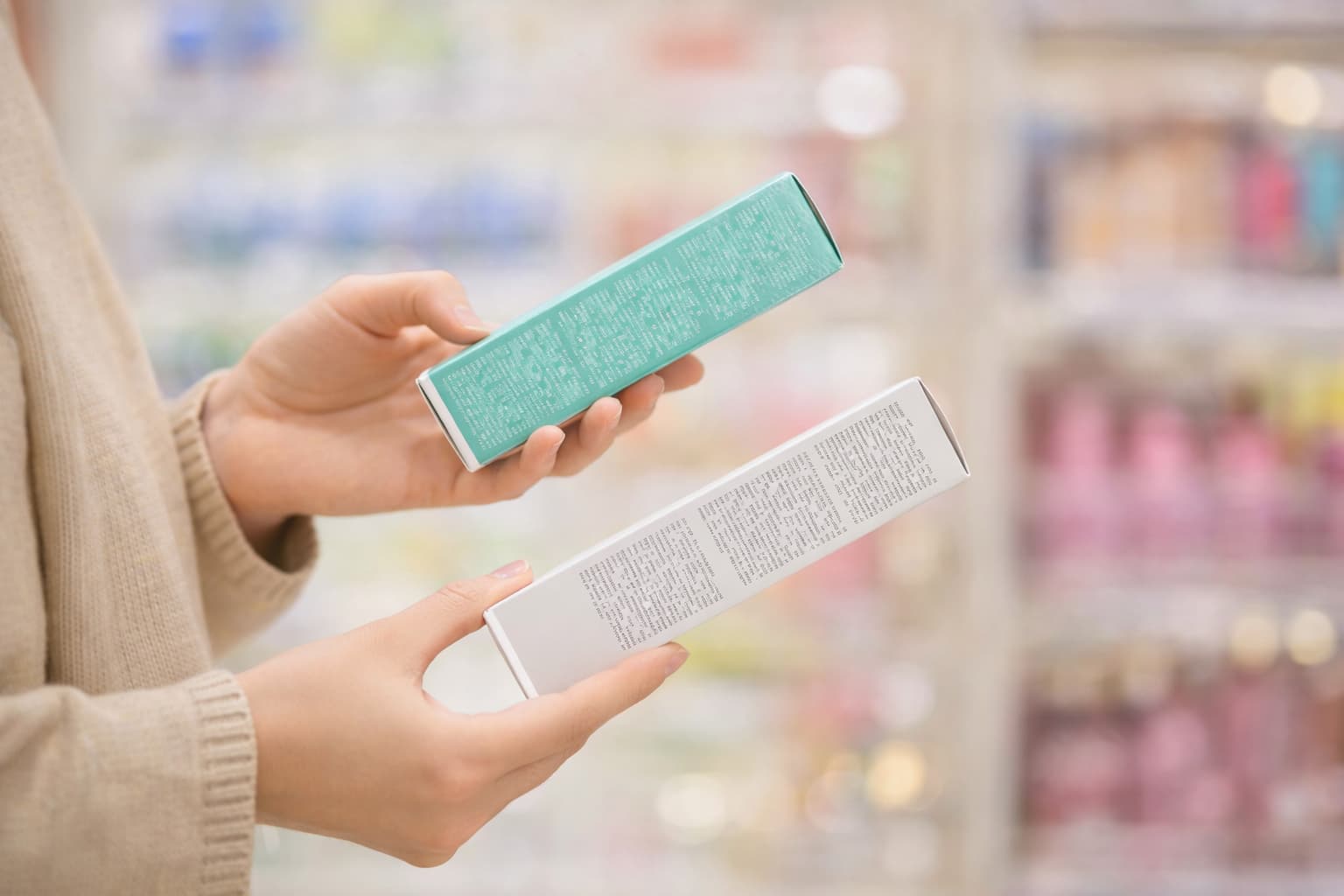
Labels for Handmade Cosmetics: Mandatory Details & Design Tips
Your cosmetic label must not only look good — it must also contain 8 mandatory legal details. This practical guide shows you which details are mandatory, how to design professional labels and where to have small runs printed.