
Natural Cosmetics Certification: Which Label Is Worth It for Small Manufacturers?
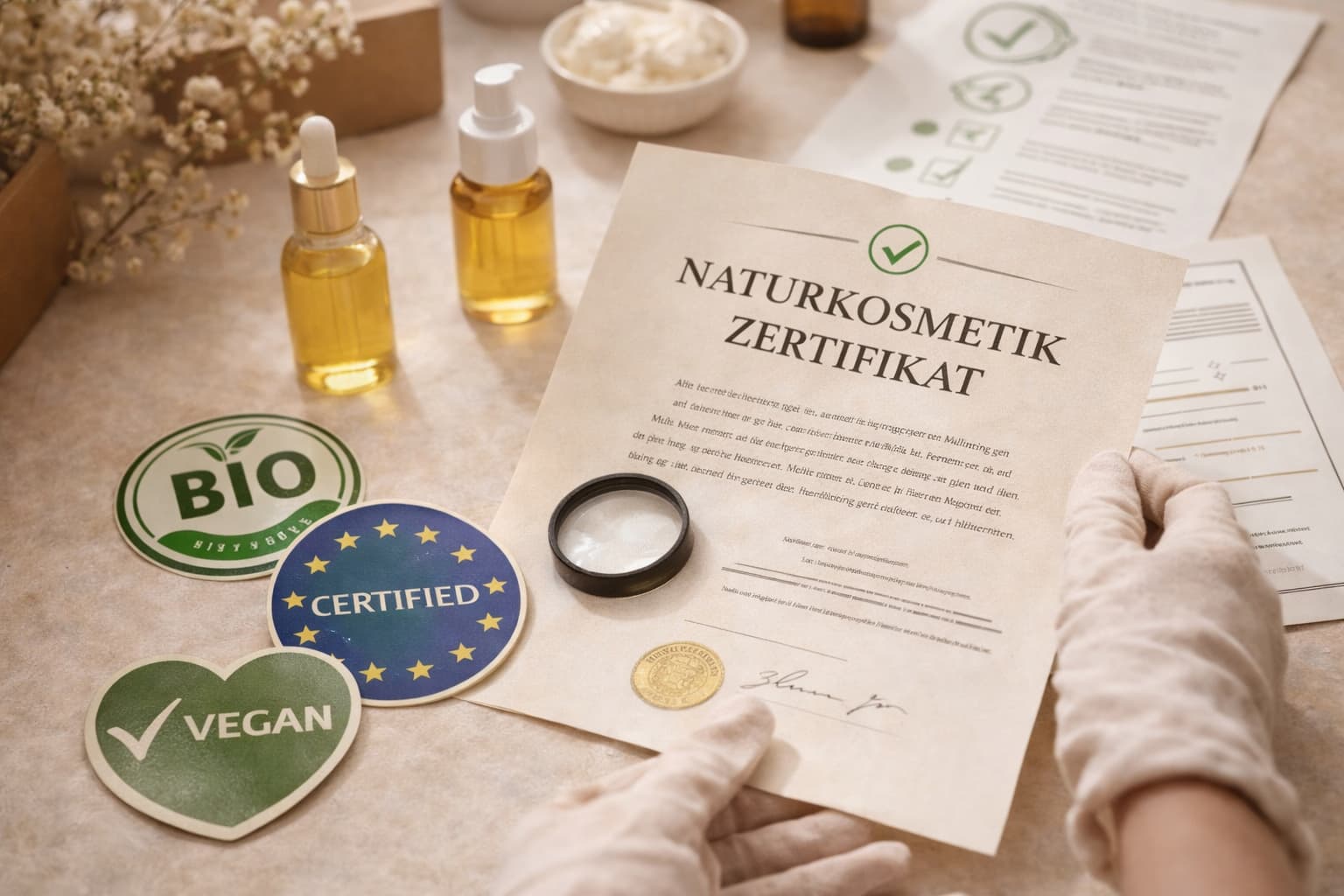
COSMOS, NATRUE, BDIH, ICADA – the world of natural cosmetics certification is hard to navigate. Which label is the right one for your natural cosmetics startup? What does it cost, and is the effort even worthwhile for small manufacturers? This comparison article brings clarity: we present the most important natural cosmetics certificationsin the DACH region, compare costs, requirements and the time involved – and show you how you can produce to a certification-ready standard even without a label.
Just getting started and want to understand the legal basics first? Then read our Guide: Selling homemade cosmetics legally first. And if you still need to register your business, our Guide to registering a home cosmetics business will help you.
The most important natural cosmetics labels in the DACH region
In Germany, Austria and Switzerland you will mainly encounter six labels when it comes to the certification of natural cosmetics. They differ considerably in their requirements, costs and market significance:
COSMOS (BDIH / ECOCERT / Soil Association)
International standard with the highest market penetration in Europe. Distinguishes between “Natural” and “Organic”.
NATRUE
Strict European standard with three quality levels. Especially popular in the DACH region.
ICADA
Affordable, accessible standard – ideal for small producers and beginners.
Demeter
Biodynamic – the highest requirements for organic raw materials. Niche market.
Vegan labels (V-Label / PETA)
Not a natural cosmetics label in the strict sense, but often used as a complement.
EU organic label
Applies primarily to food. Only of limited relevance for cosmetics.
For most small manufacturers in the DACH region, COSMOS, NATRUE and ICADA are the most relevant options. We will now look at these three labels in detail.
COSMOS (BDIH/ECOCERT): the international standard
COSMOS is the best-known standard for natural cosmetics certifications in Europe. Behind the label stand five European certifiers, including BDIH (Germany) and ECOCERT (France). The BDIH certification is therefore now part of the COSMOS system. There are two levels:
COSMOS Natural vs. COSMOS Organic
| Criterion | COSMOS Natural | COSMOS Organic |
|---|---|---|
| Natural origin | ≥ 95 % of plant-based raw materials | ≥ 95 % of plant-based raw materials |
| Organic content | No minimum requirement | ≥ 20 % organic (leave-on) / ≥ 10 % (rinse-off) |
| Synthetic ingredients | Heavily restricted (positive list) | Heavily restricted (positive list) |
| Packaging | Environmentally friendly, recyclable | Environmentally friendly, recyclable |
| Entry for small producers | Realistic | Demanding (organic raw materials more expensive) |
Requirements in detail
- Raw materials: Only ingredients from the COSMOS positive list. Prohibited substances include silicones, parabens, synthetic fragrances, PEG derivatives and petroleum-based raw materials
- Manufacturing:GMP-compliant production to ISO 22716 is a prerequisite. You can find details in our GMP guide to ISO 22716
- Packaging: Recyclable materials preferred, no PVC, minimal use of aluminium
- Animal testing:Generally prohibited – but this has been EU-wide law since 2013 anyway
Costs and process
The initial assessment for COSMOS costs, depending on the certification body and number of products, 2.000–5.000 €. On top of this come annual licence fees (approx. 500–2.000 €) and regular on-site audits. The process typically takes 3–6 months from the application to the certificate.
Who is COSMOS worth it for?
COSMOS is worthwhile for manufacturers who want to sell internationally and need a high recognition value. The label is known to consumers across Europe. For pure hobby makers with only a few products, however, the costs are often too high – here ICADA can be the better choice.
NATRUE: stricter than COSMOS? Who it pays off for
The NATRUE certificationis a European standard founded in 2007 by major natural cosmetics brands (including Weleda, Dr. Hauschka, Lavera). NATRUE is regarded as one of the strictest standards and distinguishes three quality levels:
Level 1: Natural cosmetics
Minimum content of natural ingredients, upper limits for nature-identical substances, no minimum organic content.
Level 2: Natural cosmetics with organic content
At least 70 % of the natural ingredients must come from certified organic farming.
Level 3: Organic cosmetics
At least 95 % of the natural ingredients from organic farming. Highest level.
What makes NATRUE special?
- Calculation formula:NATRUE uses a mathematical formula that calculates the natural content of every formulation. There are upper limits for nature-identical (processed) ingredients – this is stricter than COSMOS
- No greenwashing:A NATRUE-certified product may not have any non-certified variants under the same brand (the so-called “brand rule”). This prevents brands from using individual organic products as a fig leaf
- Independent certification:Assessment is carried out by accredited third parties – NATRUE itself does not certify
Costs and process
The NATRUE certification costs a similar amount to COSMOS: initial assessment 2.000–4.000 €, plus annual fees and audits. The process usually takes 3–6 months. The brand rule can be an exclusion criterion for manufacturers with a mixed range (natural + conventional).
Important: the brand rule
If you plan to sell conventional cosmetics under the same brand alongside certified products, NATRUE is not the right label for you. COSMOS allows a mixed range – with NATRUE the entire brand must be certified.
ICADA: the budget alternative for small producers
The ICADA certification(International Cosmetics and Device Association) is especially popular among small producers in the DACH region – and for good reason: it is considerably cheaper and more accessible than COSMOS or NATRUE.
Requirements
- Raw materials:At least 95 % natural or nature-identical ingredients. Prohibited are silicones, parabens, microplastics, synthetic colourants and PEG derivatives
- Manufacturing:GMP compliance is required, but no on-site audit – the assessment is document-based
- Animal testing: Prohibited (standard EU-wide anyway)
- Packaging: No specific requirements (unlike COSMOS)
Costs and process
ICADA is the clear price leader among the reputable certifications: the annual fee is 300–600 € depending on the number of products. There is no expensive initial assessment and no on-site audits. The process takes just 4–8 weeks.
Who is ICADA worth it for?
ICADA is ideal for small workshops and beginners who want a recognised natural cosmetics label without having to invest thousands of euros straight away. The label does have less market recognition than COSMOS or NATRUE, but it offers good value for money and can serve as an entry point, before you later switch to COSMOS if needed.
Organic certification for cosmetics: when do you really need it?
The terms “organic cosmetics” and “natural cosmetics” are often used synonymously – but they do not mean the same thing. This is where it becomes important to differentiate when it comes to organic cosmetics certification:
EU organic label vs. natural cosmetics label
- EU organic label: Applies primarily to food and agricultural products. For cosmetics there is no uniform EU organic regulation. You cannot simply print the EU organic label on your cream
- “Organic” in cosmetics:If you want to write “organic” on your packaging, you need a certification that confirms the organic content – e.g. COSMOS Organic, NATRUE Level 3 or Demeter. Otherwise you risk being challenged for misleading advertising
- Demeter: The strictest organic certification for cosmetics– all plant-based raw materials must come from biodynamic cultivation. Very high quality, but hardly realistic for small manufacturers, because raw material sourcing is extremely restricted
Caution: “organic” without certification
If you use the term “organic” on your packaging or in your advertising without holding a recognised certification, this can be challenged as misleading advertising under UWG § 5. The term “natural cosmetics”, by contrast, is not protected – but the same applies here: your advertising must not be misleading.
Whether you opt for “natural” or “organic” depends on your target audience and your raw material portfolio. Most beginners start with “natural cosmetics” and increase the organic content later, as demand grows.
Document raw materials in a certification-compliant way
INCIkit helps you manage all raw materials with INCI name, origin and supplier certificates – the perfect foundation for any natural cosmetics certification.
Comparison table: costs, time involved and requirements
The following table summarises the most important differences between the three most relevant labels for small manufacturers. This lets you decide at a glance which natural cosmetics certification suits you:
| Criterion | COSMOS | NATRUE | ICADA |
|---|---|---|---|
| Initial assessment | 2.000–5.000 € | 2.000–4.000 € | Incl. in annual fee |
| Annual costs | 500–2.000 € | 500–2.000 € | 300–600 € |
| On-site audit | Yes, annually | Yes, annually | No (document-based) |
| Time involved | 3–6 months | 3–6 months | 4–8 weeks |
| Market recognition | Very high (international) | High (DACH) | Medium (DACH) |
| Mixed range | Allowed | Not allowed (brand rule) | Allowed |
| Ideal for | International brands | Pure natural cosmetics brands | Small manufacturers & beginners |
Our recommendation for beginners
Start with ICADA if you want an affordable label and sell primarily in the DACH region. If you want to expand internationally or be listed by major retailers, plan the switch to COSMOS Natural in the long term. Most successful natural cosmetics startups start small and only certify once demand justifies the extra effort.
Selling without a label: is that possible? Pros and cons
The honest answer: yes, absolutely. A natural cosmetics label is not a legal requirement. You may sell your products as “natural cosmetics” even without certification, as long as your advertising is not misleading. Many successful small brands sell entirely without a label.
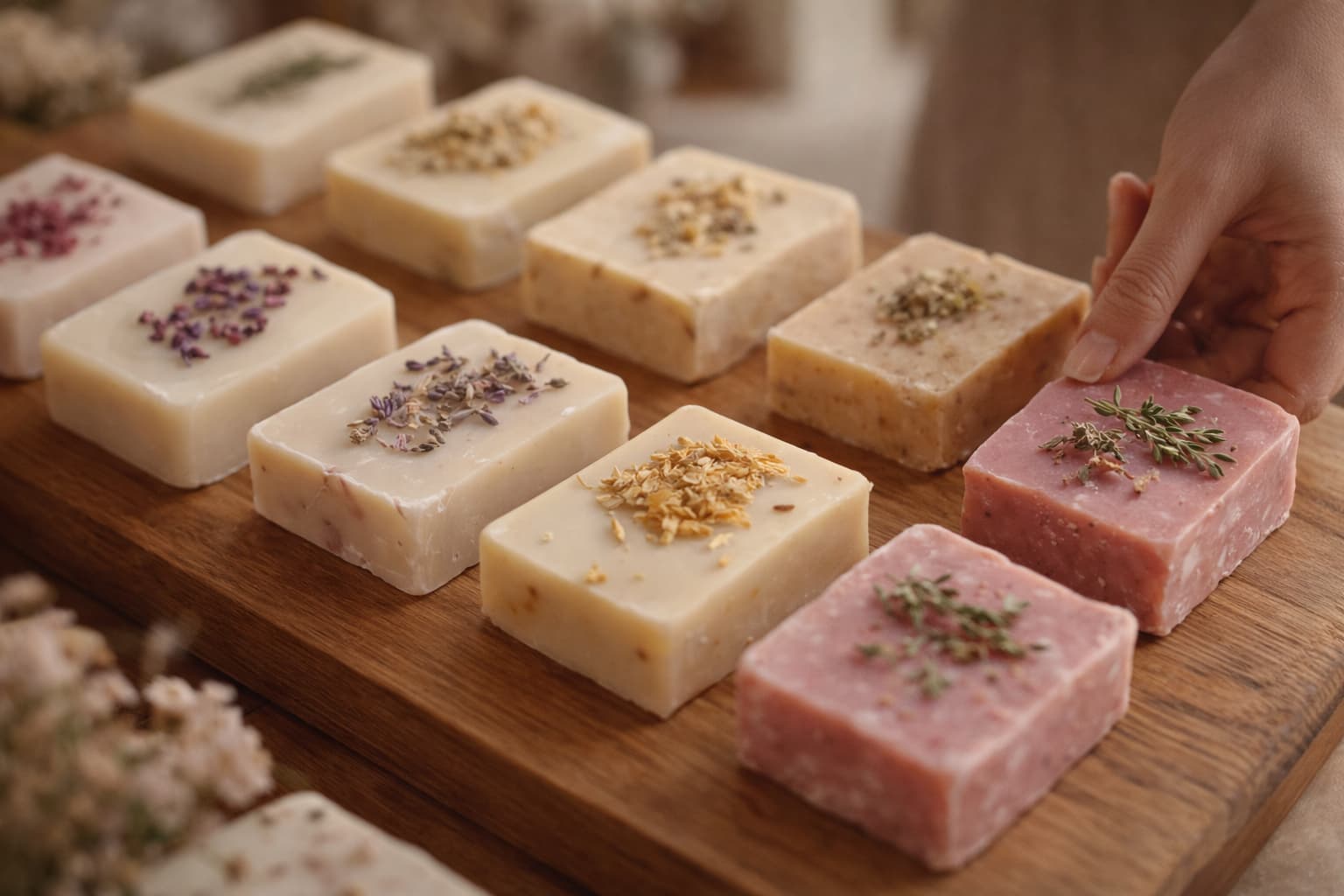
Handmade natural cosmetics – selling successfully even without a label
Advantages: starting without a label
- No certification costs:You save 300–5.000 €/year – money you can invest in raw materials, marketing or your safety assessment
- More flexibility:No positive lists, no raw material restrictions – you can formulate more freely
- Faster start: No months-long certification process. You can sell immediately once your PIF and CPNP notification are ready
Disadvantages: without a label
- Less trust: Many consumers specifically look for certified products. Without a label you have to build trust in other ways (transparency, storytelling, reviews)
- No retail: Large retailers (organic store chains, dm/Rossmann) generally list only certified products
- No protection against imitation:Without a label anyone can claim to be “natural” – you have no official proof
Practical tip: produce to certification-ready standards, even without a label
Our most important advice: even if you are not aiming for a label today, produce to a certification-ready standard from the outset. This costs nothing extra, but saves you months of changeover later if you do decide to pursue certification.
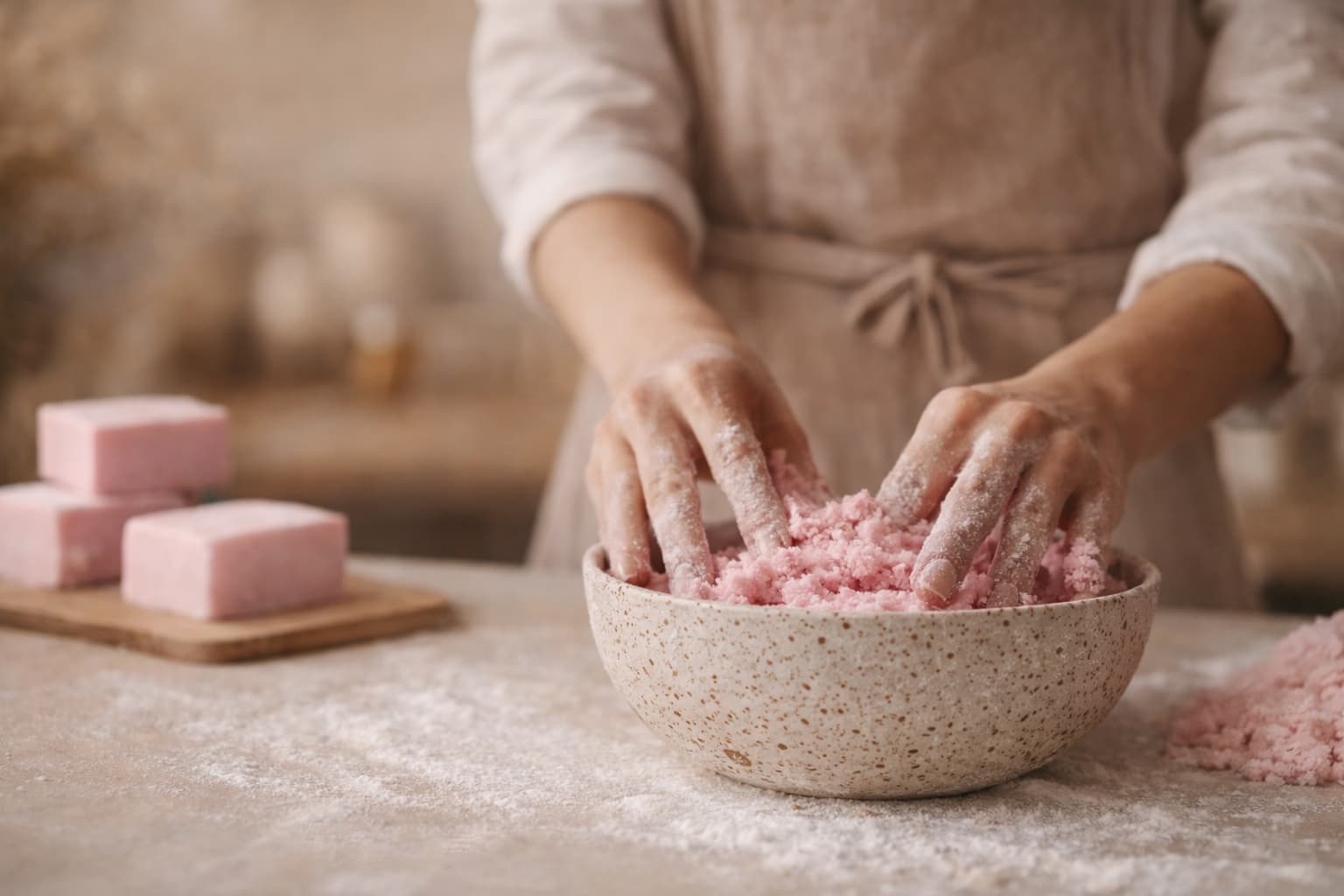
Work cleanly from the outset – producing to certification-ready standards
How to produce to certification-ready standards
Document your raw materials
Record every raw material with INCI name, supplier, LOT number, date of receipt and origin (natural/synthetic/organic). Request specifications and, where applicable, organic/natural cosmetics certificates from your suppliers.
Watch the positive list
Preferably use raw materials that appear on the COSMOS and NATRUE positive lists. That way you are immediately certification-ready later on. Avoid silicones, parabens, PEGs and synthetic fragrances.
Work GMP-compliantly
All labels require GMP to ISO 22716 – but you have to do this anyway. A clean work area, documented cleaning, batch records. Details in our GMP guide.
Create the INCI list correctly
A clean INCI declaration is the basis for any certification. Use the correct INCI nomenclature and pay attention to the correct order.
Rethink your packaging
Opt for recyclable materials (glass, aluminium, PP/PE). Avoid PVC and unnecessary outer packaging. This is good for the environment and for a later COSMOS certification.
Use digital documentation
Excel and paper folders quickly reach their limits. Digital tools like INCIkit help you document raw materials, formulations and batches cleanly from the outset – exactly what every certifier wants to see.
Particularly important is the correct INCI list: it is not only a legal requirement but also the basis for any certification. And anyone making creams or emulsions must pay particular attention to preservation and stability – certifiers check this very closely.
The current changes to the EU Cosmetics Regulation 2026 also play a role: new substance restrictions (cyclosiloxanes, PFAS) affect certified products too. Those who inform themselves early face less changeover effort later.
Frequently asked questions (FAQ)
How much does a natural cosmetics certification cost for small manufacturers?
Costs vary considerably depending on the label. At 300–600 €/year, ICADA is the cheapest option. COSMOS starts at around 2.000–5.000 € for the initial assessment plus annual licence fees. NATRUE is in a similar range to COSMOS. On top of this come internal costs for documentation, raw material changeover and, where applicable, production adjustments.
Can I sell my cosmetics as “natural cosmetics” without having a label?
Yes, the term “natural cosmetics” is not protected in the EU. You may use it as long as your advertising is not misleading (UWG § 5). Without a label, however, you must be able to prove yourself that your raw materials are actually of natural origin – for example through raw material certificates from your suppliers.
Which certification is best for beginners?
For beginners on a small budget we recommend ICADA: low costs, a fast process, no annual on-site audits. Anyone who wants to sell internationally and accepts higher requirements is best served by COSMOS Natural – the label has the highest market penetration in Europe.
What is the difference between COSMOS Natural and COSMOS Organic?
COSMOS Natural requires that at least 95 % of the plant-based raw materials are of natural origin, but sets no minimum requirement for the organic content. COSMOS Organic additionally requires that at least 20 % of all ingredients (10 % for rinse-off products) come from organic farming. For beginners, COSMOS Natural is the more realistic entry point.
Do I also need GMP documentation for a natural cosmetics certification?
Yes. All reputable labels (COSMOS, NATRUE, ICADA) require GMP-compliant production to ISO 22716. This is a legal requirement under the EU Cosmetics Regulation (EC) 1223/2009 anyway – regardless of any label. If you already work GMP-compliantly, you have already laid the most important foundation.
Conclusion: natural cosmetics certification – not a must, but it can pay off
A natural cosmetics certificationis not mandatory – but it can be a strong selling point. Choosing the right label depends on your budget, your target audience and your long-term plans:
- Budget entry:ICADA (300–600 €/year)
- International ambitions: COSMOS Natural
- Pure natural cosmetics brand: NATRUE
- Still unsure? Produce to certification-ready standards and decide later
Regardless of whether you decide on a label today: produce to the standards of the common certifications from the outset. Document your raw materials cleanly, work GMP-compliantly and create correct INCI lists. That way you are always ready – for certification, for authority inspections and for the trust of your customers.
Further resources
Want to document your formulas and INCI lists professionally?
INCIkit brings formulas, INCI declaration and batch documentation into one app — free for 14 days, no credit card required.
INCIkit Editorial
Cosmetics Compliance Desk
More articles
Starting Your Own Cosmetics Brand: From Idea to Finished Brand
Want to start your own cosmetics brand? This hands-on guide shows you the way step by step — from brand concept and logo through product line and packaging to distribution, marketing and a realistic cost overview.
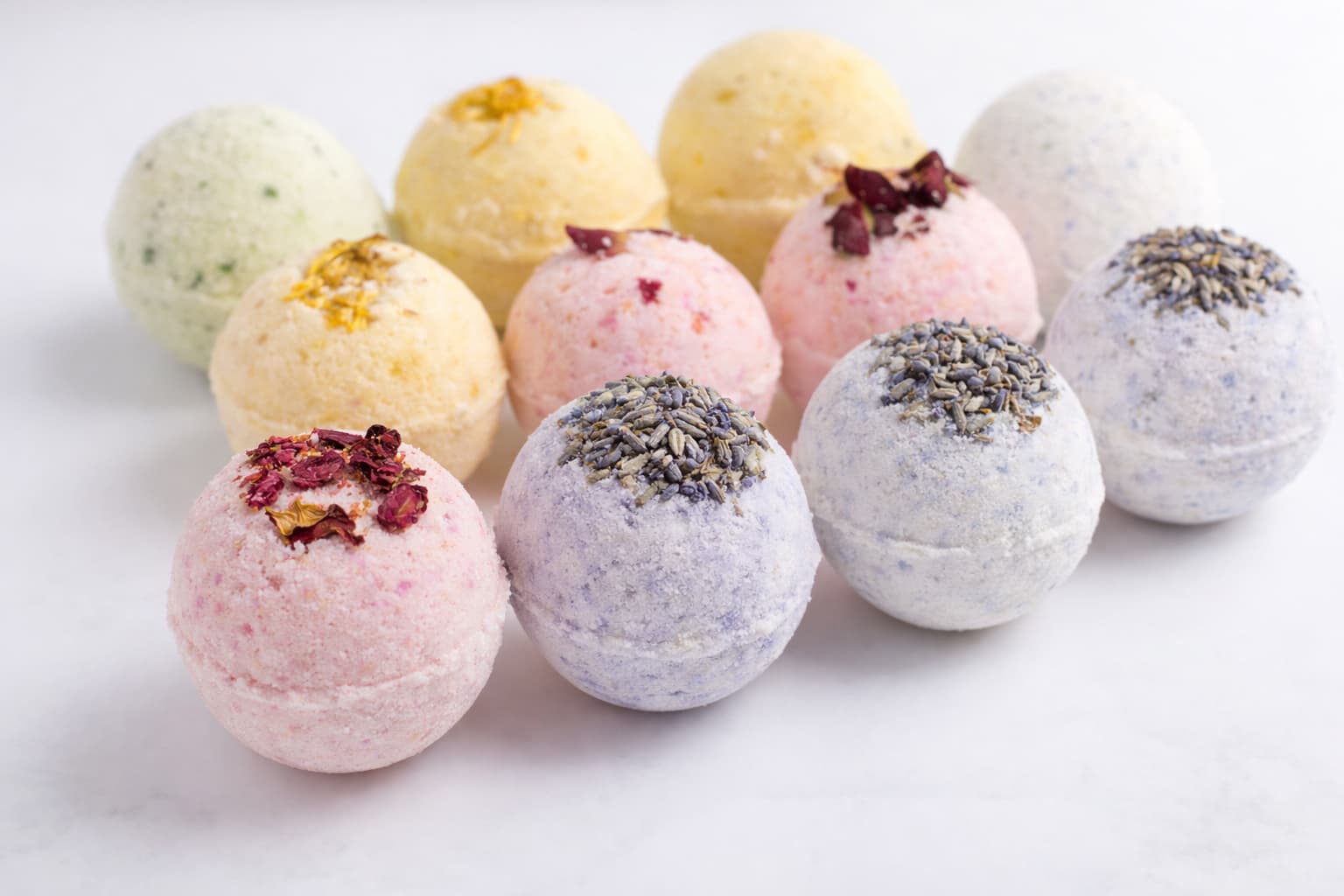
Lip Balm, Bath Bombs & Co: The Best Starter Products for Your Cosmetics Business
Which cosmetic product is the easiest to start with? We compare 6 categories — from lip balm through bath bombs to body oils — by complexity, cost, shelf life and regulation.
Labels for Handmade Cosmetics: Mandatory Details & Design Tips
Your cosmetic label must not only look good — it must also contain 8 mandatory legal details. This practical guide shows you which details are mandatory, how to design professional labels and where to have small runs printed.