
Cosmetics Software Compared: ERP vs. PLM vs. Specialised Compliance Tools
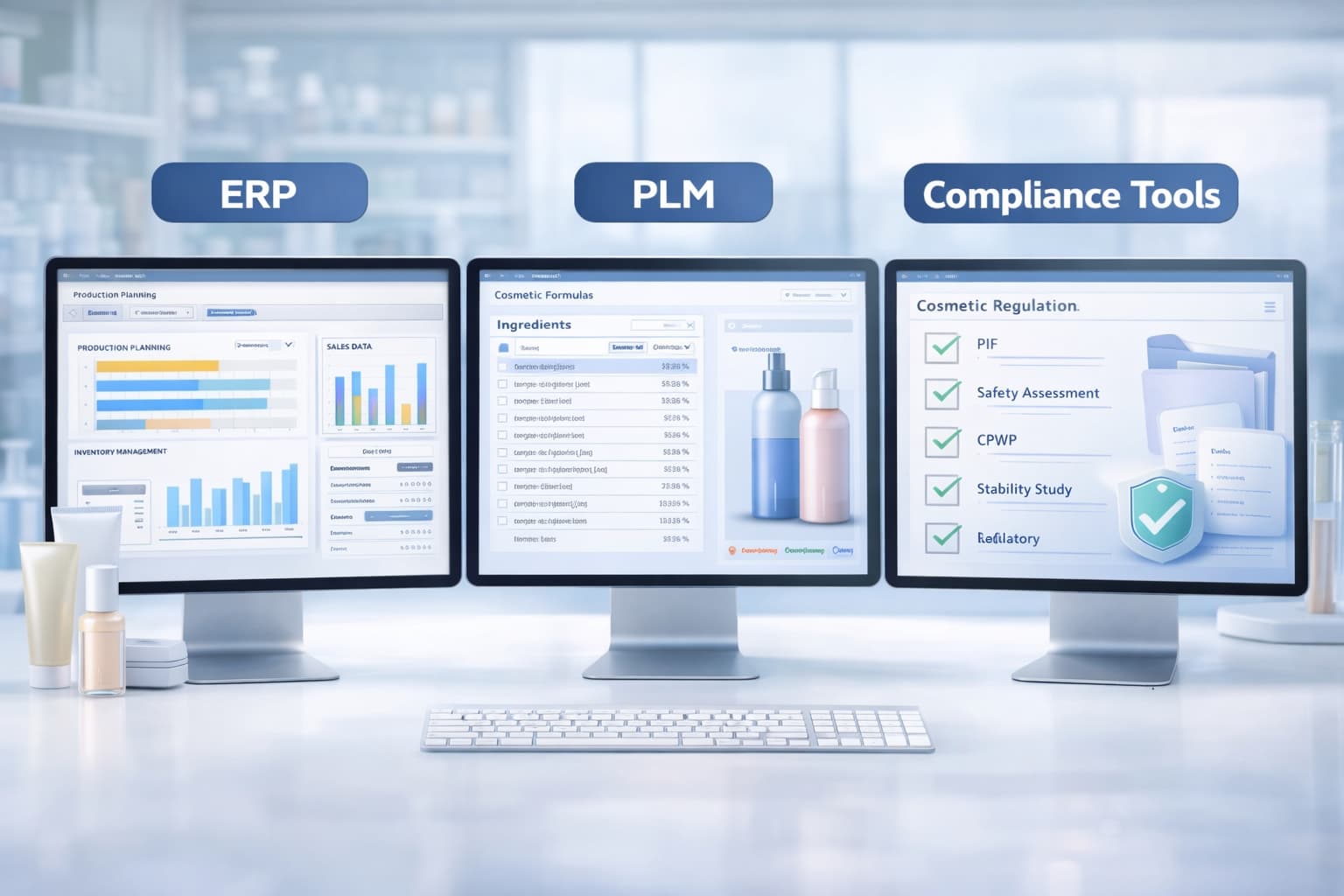
The EU Cosmetics Regulation, GMP under ISO 22716, 10 years of archiving obligations, INCI declaration, batch records, batch traceability — the regulatory requirements for cosmetics manufacturers are the same whether you have 5 or 500 products in your range. Only the software you use to meet these requirements differs considerably.
Three approaches dominate the market: ERP systems for inventory management and finance, PLM systems for the product lifecycle and specialised compliance toolsfor formulations, INCI lists and production documentation. This comparison shows what each approach delivers, where its limits lie and which system suits which manufacturer — with a feature comparison, concrete cost ranges and three practical examples.
Three software approaches at a glance
Before you compare products, you should understand the three fundamental system categories. Each solves a different problem — and none solves all of them on its own:
| Category | Focus | Strength | Typical users | Suitability for cosmetics |
|---|---|---|---|---|
| ERP | Inventory management, finance | Purchasing, warehousing, shipping, accounting | Retail, manufacturing, e-commerce | Low without cosmetics modules |
| PLM | Product lifecycle | Variants, artwork, specifications | Brands with 100+ SKUs | Medium — compliance often missing |
| Compliance tool | Regulatory affairs, formulations | INCI, batch records, archive | SME manufacturers, contract manufacturers | High — specialised |
There is no single system for everything
The crucial question is not “Which system is the best?” but: where is your bottleneck? If you can’t trace raw materials, no ERP will help. If you can’t export batch records, no PLM will help. Identify the problem first — then the tool.
ERP systems: Xentral, SAP Business One, weclapp
ERP systems (Enterprise Resource Planning) are the backbone of operational business processes. They manage purchasing, warehousing, financial accounting, shipping and order processing — functions every manufacturing company needs. For cosmetics manufacturers, three providers in the DACH region are particularly relevant:
- Xentral: A German cloud ERP specialising in D2C brands and manufacturing SMEs. Bills of materials, warehouse management, multichannel shipping. No native cosmetics compliance.
- SAP Business One:An enterprise ERP for mid-sized companies. From approx. 38 €/user/month (Cloud), 3–6 months implementation time. Industry verticals are possible, but cosmetics-specific modules are rare.
- weclapp:A cloud ERP with inventory management, CRM and e-commerce integration. Entry price from approx. 59 €/month. Designed for smaller retailers, with no formulation features.
What ERPs deliver: inventory management, ordering, invoicing, warehouse management, shipping logistics and financial accounting. In production, they can map bills of materials and simple manufacturing orders.
Where ERPs reach their limits:formulation versioning with an audit trail, automatic INCI breakdown, CPSR and PIF management, GMP-compliant batch records with target/actual comparison and 10-year archiving — none of these functions is included in standard ERPs. Our guide shows in detail what the GMP requirements under ISO 22716 involve.
ERP + Excel = a hidden compliance risk
Many manufacturers buy an ERP for inventory management and finance — and still end up using Excel for formulations and batch records. The result: two systems with no connection between them, no end-to-end batch traceability and, in a GMP audit, a documentation problem.
PLM systems: Centric Software and others
PLM systems (Product Lifecycle Management) manage the entire lifecycle of a product: from the initial idea through specifications and artwork to market launch in various countries. For large cosmetics brands with hundreds of SKUs and international distribution, PLMs are often the central system.
Centric Softwareis the market leader in the cosmetics PLM segment. More than 20,000 brands use the platform for product data management, collection planning and artwork management. The entry price is approx. 1,000 $/month, and implementation typically takes 3–9 months.
Strengths for large manufacturers:
- Central product data management for hundreds of variants across multiple markets
- Artwork management and print approval workflows
- Collection planning with timelines and milestones
- Supplier portal for exchanging specifications
Weaknesses for SMEs: enterprise pricing (a five-figure annual licence), lengthy implementation, high configuration overhead for small teams. Cosmetics-specific compliance features such as INCI breakdown, batch record export and batch traceability are often not included natively.
When is PLM worthwhile?
PLM is ideal if you manage 100+ product variants across multiple markets, have a dedicated R&D team and need to coordinate artwork approvals across several departments. For manufacturers with fewer than 50 products, the overhead is usually not justified.
Specialised compliance and formulation tools
The third category comprises software developed specifically for the cosmetics industry — with a focus on regulatory requirements and formulation. Two established providers:
- Cosmetri (Registrar Corp):A cloud-based compliance platform with CPSR automation, PIF generation and batch tracking. ISO 27001-certified, with stability testing and workflow management integrated. Geared towards medium-sized to large companies.
- Coptis:An R&D-focused platform with allergen management, MoS calculation (Margin of Safety) and toxicology reports. From approx. 50,000 €/year — designed for large R&D departments with complex formulation requirements.
Strengths of specialised tools: deep regulatory automation that neither ERP nor PLM offers natively. INCI breakdown, automatic Annex checking, safety assessment preparation and standard-compliant batch records are core functions, not optional add-ons.
Typical limitation:no inventory management or finance module. Purchasing, warehousing and shipping have to be solved separately — either through an ERP or simpler tools. In addition, enterprise solutions such as Coptis are often not affordable for small manufacturers.
INCIkitpositions itself as a specialised compliance tool for small and medium-sized cosmetics manufacturers: formulation management with version control, automatic INCI breakdown, GMP-compliant batch records with PDF export, batch traceability and a 10-year archive — without enterprise pricing. To see what an end-to-end formulation workflow looks like, take a look at our formulation management guide.
Comparison table: features, costs, target audience
The following table compares the four approaches based on the features relevant to cosmetics manufacturers — from formulation management to price level:
| Feature | ERP | PLM | Compliance tool | INCIkit |
|---|---|---|---|---|
| Formulation management | No | Partial | Yes | Yes |
| Version control | No | Yes | Yes | Yes |
| INCI breakdown | No | No | Yes | Yes |
| CPSR/PIF support | No | No | Yes | Yes |
| Batch record export | No | No | Partial | Yes (PDF) |
| Batch traceability | Partial | Partial | Yes | Yes |
| Archive (10 yrs) | No | No | Yes | Yes |
| Inventory management | Yes | No | No | No |
| Purchasing / finance | Yes | No | No | No |
| Price level | From 38 €/user/month | From 1,000 $/month | From 50,000 €/year | See pricing |
| Implementation | 2–6 months | 3–9 months | 2–8 weeks | Instant (SaaS) |
| Target audience | Retail, manufacturing | Large brands | Enterprise R&D | SME manufacturers |
The table makes it clear: no single system covers every area. ERPs dominate in inventory management and finance, PLMs in product data and variants, specialised tools in compliance and formulation. Which combination suits you depends on your size and your bottleneck.
Which system suits which manufacturer?
Instead of abstract recommendations, three practical examples show how different types of manufacturer build their software landscape:
Practical example 1: a start-up with 5 products
A founder starts with 5 facial care products, selling through her own online shop and a regional warehouse.
- Bottleneck:compliance documentation — formulations in Excel, INCI lists created manually, batch records as Word templates
- Doesn’t need: an SAP-level ERP or a PLM for hundreds of variants
- Solution: a specialised compliance tool for formulations, INCI and batch records. Inventory management via Shopify or a simple stock list
Result:saves 30–40 hours of documentation work per product. The safety assessment automatically receives the right data.
Practical example 2: a mid-sized company with 200 SKUs
An established manufacturer sells 200 products in 12 EU countries, has an 8-person team and works with external contract manufacturers.
- Bottleneck:product data chaos — specifications in different folders, artwork versions unclear, country adaptations done manually
- Needs: a PLM for product data and variants + an ERP for inventory management and shipping + a compliance tool for formulations
- Solution: Centric PLM for the product lifecycle, keep the existing ERP, a compliance tool for regulatory documentation
Result: centralised product data, clear artwork approvals, but a higher investment and longer implementation.
Practical example 3: a contract manufacturer with 15 clients
A contract manufacturer produces for 15 brands, manages more than 80 formulations and has to supply a batch record to the respective client for every batch.
- Bottleneck:multi-client capability — batch tracking per client, client-specific formulations, batch records in the client’s format
- Needs: a compliance tool with batch traceability and PDF export + an ERP for order processing
- Solution: a compliance tool for formulations and batch records, an ERP for order management and invoicing
Result:every client receives standard-compliant batch records, and batch traceability runs end to end — critical for GMP audits.
Decision matrix by number of products
- < 10 products:a specialised compliance tool — covers formulations, INCI and batch records
- 10–100 products:a compliance tool + ERP — or a PLM, if variants and countries form the bottleneck
- 100+ products:PLM + ERP + a compliance tool if needed — three systems for three different tasks
Checklist: choosing software for cosmetics manufacturers
The following checklist helps you systematically prepare the right software decision — regardless of whether you’re evaluating an ERP, PLM or compliance tool:
- Bottleneck identified: is it in inventory management, product data or compliance documentation?
- Cosmetics-specific features checked: INCI breakdown, formulation versioning, batch record export
- GMP requirements covered: batch records, target/actual comparison, deviation management, audit trail
- Batch traceability: raw material LOT → production batch → finished product documented without gaps
- Archiving secured: 10 years' retention under EU Regulation (EC) No 1223/2009
- Price level realistic: total cost including implementation, training and ongoing licence assessed
- Implementation time known: days (compliance tool) vs. weeks (ERP) vs. months (PLM)
- Trial phase planned: free trial version or demo used before the purchase decision
- Interfaces checked: import/export to existing systems (ERP, accounting, warehouse) possible
- Scalability assessed: the system grows with 10, 50 or 100+ products without a change of system
Further resources
Requirements, documentation and audit preparation for cosmetics manufacturers.
5 phases from raw material selection to market release — with practical examples.
The CPSR process, costs and common preparation mistakes for cosmetic products.
Want to document your formulas and INCI lists professionally?
INCIkit brings formulas, INCI declaration and batch documentation into one app — free for 14 days, no credit card required.
INCIkit Editorial
Cosmetics Compliance Desk
More articles
Starting Your Own Cosmetics Brand: From Idea to Finished Brand
Want to start your own cosmetics brand? This hands-on guide shows you the way step by step — from brand concept and logo through product line and packaging to distribution, marketing and a realistic cost overview.
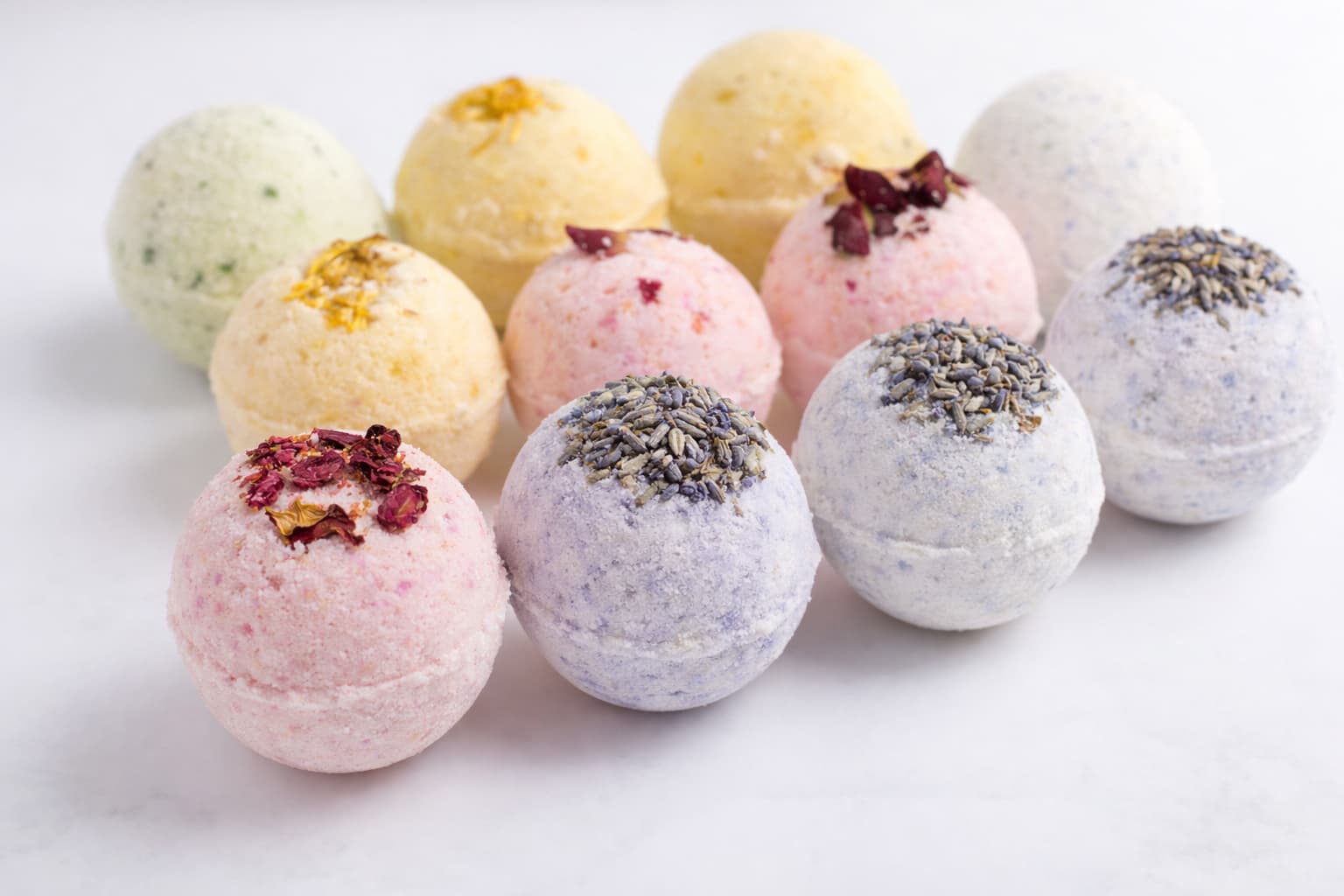
Lip Balm, Bath Bombs & Co: The Best Starter Products for Your Cosmetics Business
Which cosmetic product is the easiest to start with? We compare 6 categories — from lip balm through bath bombs to body oils — by complexity, cost, shelf life and regulation.
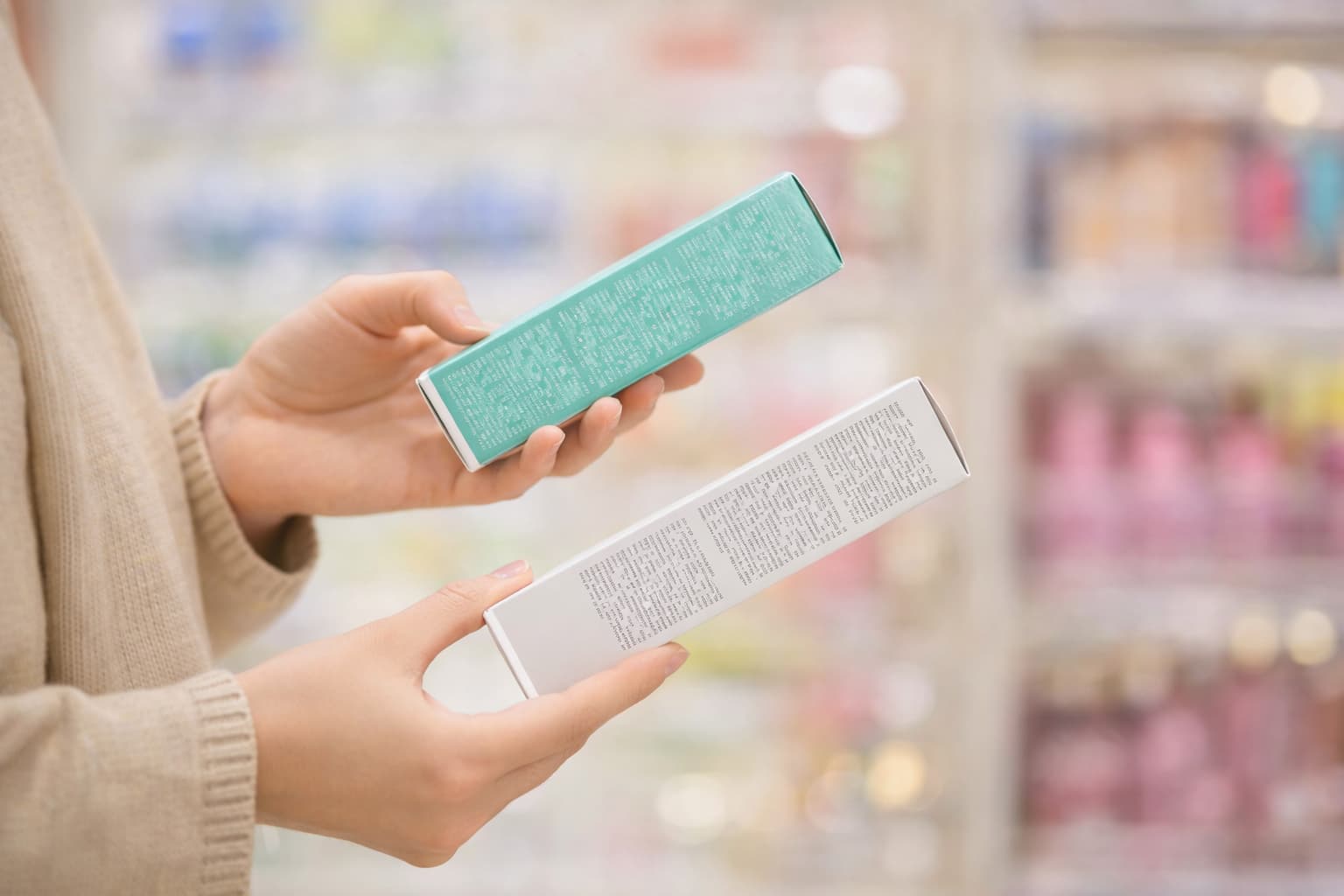
Labels for Handmade Cosmetics: Mandatory Details & Design Tips
Your cosmetic label must not only look good — it must also contain 8 mandatory legal details. This practical guide shows you which details are mandatory, how to design professional labels and where to have small runs printed.