
Formulation Management for Cosmetics: From Idea to Market-Ready Product
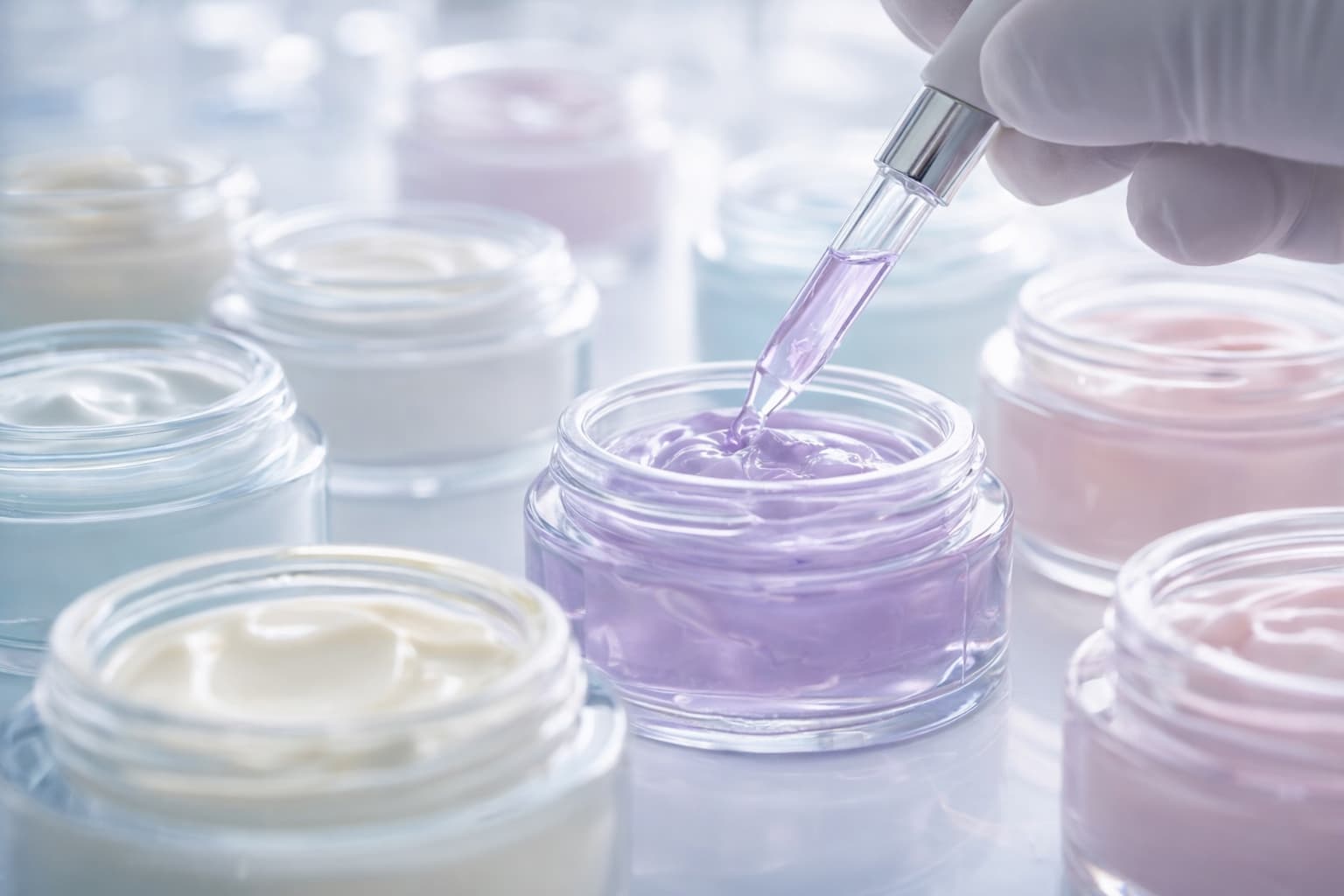
A cosmetic product placed on the market in the EU has passed through at least five development phases — from the first raw material research to the released production batch. For small manufacturers, the challenge lies not in the formulation itself, but in the documentation: who changed which formulation version, and when? Which raw material batch is in which production batch? And where are the stability data for the safety assessment?
This guide shows the complete workflow from raw material to shelf. You will learn which steps are needed in which order, what timeframes to plan for and where the typical bottlenecks lie for SME manufacturers. At the end you will find a software comparison and a checklist to work through.
What is formulation management in cosmetics?
Formulation management covers all the processes surrounding the development, documentation, versioning and archiving of cosmetic formulations. It begins with the selection of suitable raw materials and ends only once the last production batch has been archived — under the EU Cosmetics Regulation (EC) No 1223/2009, at least 10 years after it was last placed on the market.
Why is this so critical for small manufacturers? Because the regulatory requirements are the same as for large corporations: complete batch traceability, GMP-compliant documentation to ISO 22716 and an unbroken version history for every formulation. Anyone trying to cover these requirements with Excel files and paper folders will hit their limits by the third product at the latest. What the GMP requirements look like in detail is described in our guide to ISO 22716.
Formulation vs. formulation development
The formulation is the result: a quantitative composition with exact concentrations. Formulation developmentrefers to the entire development process — including laboratory samples, adjustments and tests. The two terms are often used synonymously, yet they mean different things.
Phase 1: Raw material selection and research
Timeframe: 2–4 weeks
Every formulation begins with the question: which raw materials are candidates, and are they permitted under the regulations? In the CosIng database, the EU lists all approved cosmetic ingredients with their INCI names, functions and restrictions. In this phase you check:
- INCI nomenclature:Do your supplier's raw material designations match the CosIng entries? How to build a correct INCI list is shown in our INCI guide.
- Annex II–VI:Is the substance prohibited (Annex II), restricted (Annex III) or regulated as a colourant/UV filter/preservative (Annex IV–VI)?
- Supplier qualification: Request the Certificate of Analysis (CoA), safety data sheet (MSDS), allergen breakdown and IFRA certificates for fragrances.
- SCCS opinions: Are there current opinions from the Scientific Committee on Consumer Safety on your target substances?
Tip: check SCCS opinions in advance
Check the current SCCS opinions before you start formulating. If an ingredient is currently under review or new limits are being discussed, you can respond early — saving weeks of rework.
Phase 2: Formulation and laboratory samples
Timeframe: 4–8 weeks
In this phase the formulation is developed and iterated in the laboratory. You produce laboratory samples in small quantities (typically 100–500 g), test stability, sensory properties and skin compatibility, and adjust concentrations. Typical steps:
- Produce laboratory samples: Mix the first composition; document pH value, viscosity, colour and odour
- Choose the preservative system: Based on the product category (leave-on vs. rinse-off) and water activity
- Test compatibility:Emulsion stability, phase separation, colour changes over 48–72 hours
- Document versions: Record every change with date, concentrations and observations
Practical example: vegan face serum with 12 ingredients
A small manufacturer develops a hyaluronic acid serum. Three laboratory versions are needed:
- V1:Viscosity too high — the dropper does not work; thickener concentration reduced from 0.8 % to 0.4 %
- V2:Phase separation after 2 weeks — emulsifier changed, homogenisation time extended
- V3:Stable after 4 weeks of accelerated ageing testing — proceeds to stability testing
Duration: 6 weeks. Lesson: Without versioning, the data from V1 and V2 would be lost — even though they must be documented for the safety assessment.
Phase 3: Stability testing and preservation
Timeframe: 3–6 months
Stability testing is the most time-critical stage. Without stability data, no safety assessor can produce a valid CPSR. The following table shows the four most important types of test:
| Test | Conditions | Duration | Purpose |
|---|---|---|---|
| Accelerated Stability | 40 °C / 75 % rH | 12 weeks | Corresponds to approx. 30 months of real-time shelf life |
| Real-Time | Room temperature, < 75 % rH | 6–24 months | Actual shelf-life validation |
| Challenge Test (ISO 11930) | Microbial inoculation | 28 days | Efficacy of the preservative system |
| Freeze-Thaw | −10 °C / +40 °C cycles | 6 cycles | Packaging integrity, emulsion stability |
The Accelerated Stability Testis the most important preliminary check: 12 weeks at elevated temperature simulate around 30 months of real-time shelf life at 20 °C. Running in parallel is the Challenge Test to ISO 11930, which shows whether the preservative system works under extreme conditions. Only once both results are available can the safety assessment (CPSR) begin.
The most common cause of delays
Stability tests started too late are the main reason why small manufacturers miss their planned market launch. Without stability data, no safety assessor can complete the CPSR — and without a CPSR the product may not be sold.
Phase 4: Regulatory steps and safety assessment
Timeframe: 4–8 weeks
Once the stability data are available, the regulatory phase begins. Three work packages run partly in parallel:
- Safety assessment (CPSR):You compile all the documentation for Part A (formulation, raw material profiles, stability data, laboratory tests) and the safety assessor produces Part B. Turnaround time: 10–15 working days after complete delivery. You will find details of the procedure in our CPSR guide.
- Product Information File (PIF):The PIF is the complete file for your product — CPSR, manufacturing method, GMP evidence, efficacy substantiation and label. Its structure and content are described in our PIF guide.
- CPNP notification:Before being placed on the market, the product must be registered in the EU's Cosmetic Products Notification Portal — free of charge, but mandatory.
Compliance effort for SME manufacturers
Experience shows that a manufacturer who handles the regulatory steps manually (gathering documentation, consolidating raw material data from various sources, maintaining the PIF in a folder structure) needs 40–80 hours per product. Centralised formulation management with linked raw material data reduces this effort considerably. Our overview of the 2026 Cosmetics Regulation summarises which new regulatory requirements are being added that year.
Phase 5: Scale-up and market release
Timeframe: 2–4 weeks
The transition from laboratory sample to production batch is the moment that reveals whether the formulation and its documentation hold up in practice. The laboratory formulation (500 g) is scaled up to production quantities (5–50 kg). In the process, several things change:
- Mixing times: Emulsification at larger volumes requires longer homogenisation
- Temperature control: Heating and cooling rates differ at production scale
- Batch record:Target and actual quantities for every raw material, LOT numbers, release documentation — everything a GMP audit checks
Practical example: scaling up a hand cream from 500 g to 50 kg
A natural cosmetics manufacturer scales up its shea butter hand cream for the first production batch:
- Laboratory formulation:500 g, 14 raw materials, mixed manually in a beaker
- Production batch:50 kg in a stirred vessel — homogenisation time increased from 5 to 15 minutes
- Deviation:3 of 14 raw materials slightly outside the target tolerance (±2 %) — documented, assessed and the batch released with a deviation note
Lesson:The documented deviation is not a problem — an undocumentedone would be. That is exactly what GMP to ISO 22716 requires: not perfection, but complete traceability.
Software comparison: formulation management tools
Not every manufacturer needs an enterprise PLM. The following table shows which approaches exist — and where the differences lie for small and medium-sized manufacturers:
| Feature | Excel / paper | Enterprise PLM | R&D tool | INCIkit |
|---|---|---|---|---|
| Formulation management | Manual | Yes | Yes | Yes |
| Version control | No | Yes | Yes | Yes |
| INCI breakdown | No | Partial | Yes | Yes |
| Batch record export | No | Partial | No | Yes (PDF) |
| Batch traceability | No | Yes | No | Yes |
| Production archive | No | Yes | No | Yes (10 yrs) |
| Price level | Free | From 5,000 €/year | From 3,000 €/year | See pricing |
| Target group | Individuals | Large corporations | R&D teams | SME manufacturers |
The right tool depends on your size
If you manage fewer than 50 products, you do not need an enterprise PLM with a six-figure licence price. But you definitely need something better than Excel — at the latest, when the first GMP auditor asks to see your version history.
Checklist: formulation management workflow
The following checklist summarises all the milestones from the first raw material to the archived production batch:
- Raw material research: CosIng, SCCS opinions, Annex II–VI checked
- Suppliers qualified: CoA, safety data sheet, allergen data available
- Laboratory samples documented: all versions with concentrations and observations
- Preservative system chosen and Challenge Test (ISO 11930) commissioned
- Stability tests started: Accelerated (12 weeks) + Real-Time in parallel
- Safety assessment commissioned: Part A documentation handed over to the assessor in full
- PIF compiled: all 5 mandatory components under Art. 11 present
- CPNP notification submitted: completed before placing on the market
- Production batch record created: target/actual quantities, LOT numbers, release documented
- Formulation versioned and archived: 10 years of retention secured
Further resources
Order, nomenclature and raw material breakdown for the INCI declaration.
Procedure, costs in the DACH region and common mistakes when preparing the CPSR.
All 5 mandatory components of the Product Information File under Art. 11 EU Regulation 1223/2009.
Document production GMP-compliant?
Batch records with target/actual amounts, LOT numbers and batch traceability — generated from your formula.
INCIkit Editorial
Cosmetics Compliance Desk
More articles
Make and Sell Your Own Cream: Your Route to a Market-Ready Product
Want to sell your homemade cream? This guide explains everything about preservation, stability, INCI declaration and approval — specifically for emulsions such as face creams and body lotions.
Making and Selling Soap: Everything You Need to Know
Want to sell your homemade soap? This guide explains all the rules, from the EU Cosmetics Regulation through the safety assessment and INCI list to the CPNP notification. With a practical example and cost table.
Selling Homemade Cosmetics Legally: The Complete Beginner's Guide
Want to sell your handmade cosmetics? This guide explains the 5 steps from business registration through the safety assessment to the CPNP notification — with concrete costs, real-world examples and a checklist.